Red Chicken Pozole (Pozole Rojo de Pollo)

52
Updated Sep 11, 2026
This post may contain affiliate links. Please read our disclosure policy.
If you love the deep red chile flavor of menudo but don’t always want the long simmer and extra prep, this Red Chicken Pozole is for you.
I didn’t grow up eating pozole every weekend, but I did grow up with a pot of red chile sauce on the stove. That same sauce was the base for [LINK: stacked red enchiladas], menudo, asado de puerco, and so many of the dishes that defined our Northern Mexican home cooking.
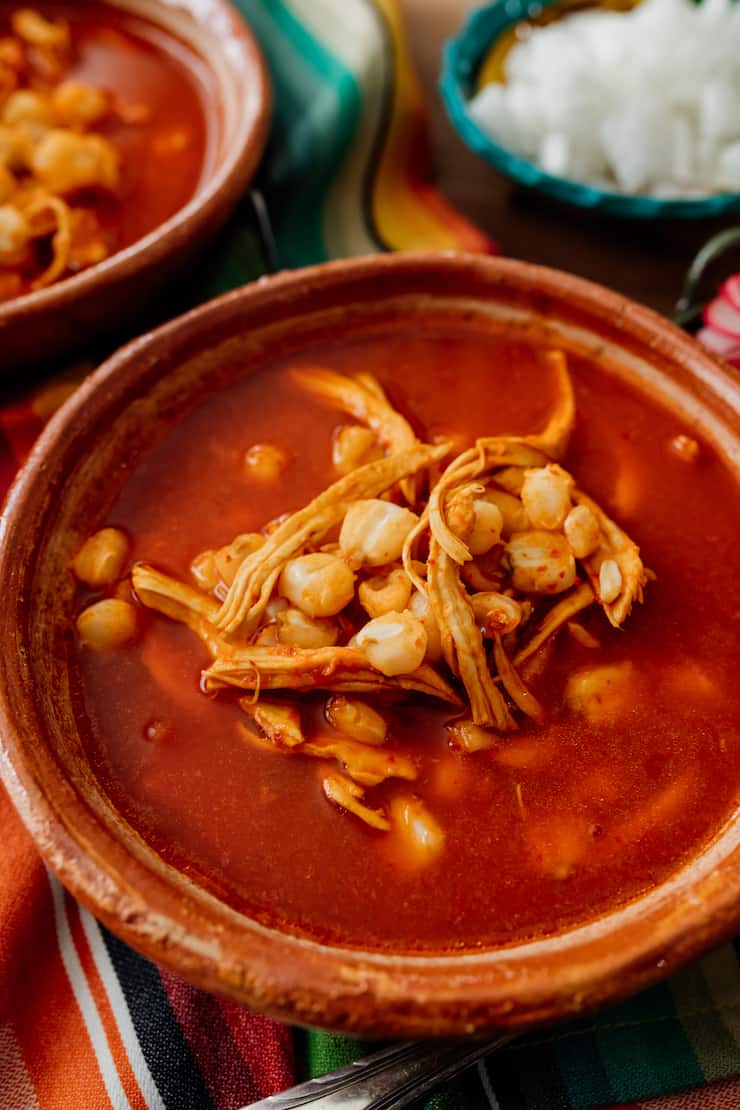
This pozole pulls from that same rich red chile foundation. Tender shredded chicken and hominy simmer in a broth made with New Mexico red chiles or guajillo chiles, giving it that earthy, comforting flavor I know and love.
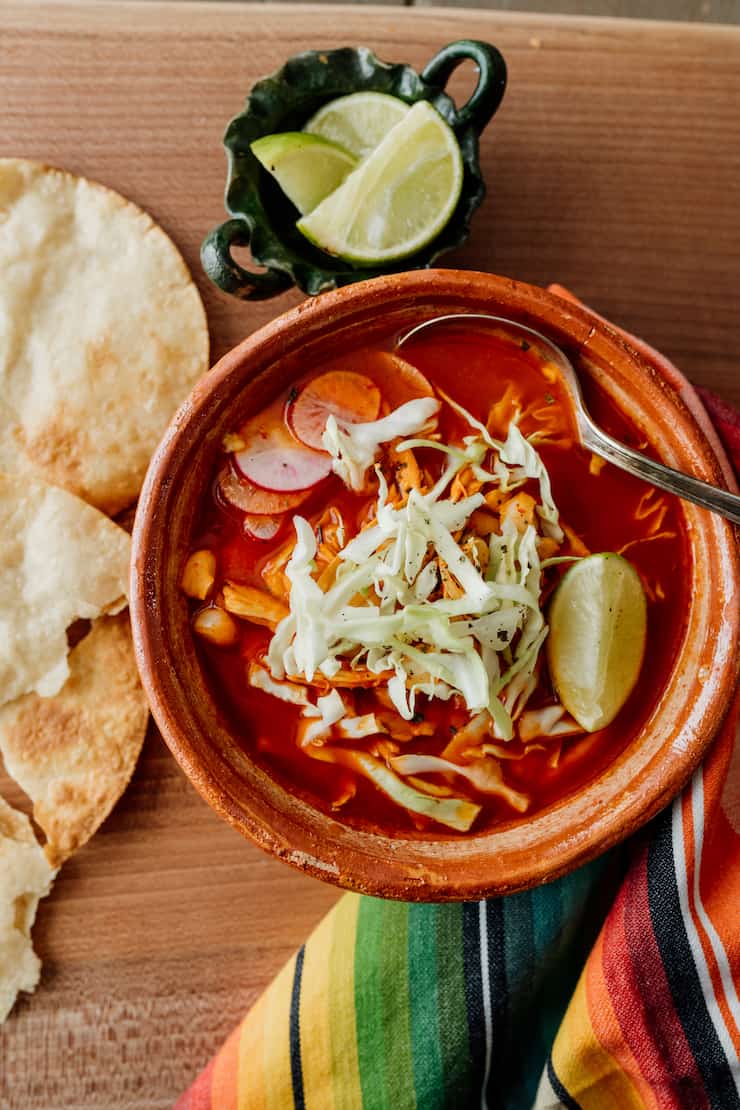
I love menudo, but not everyone in my family does. This chicken pozole gives us many of those same comforting flavors of red chile, hominy, and oregano without the tripe and pig’s feet, so it’s something everyone at my table can enjoy.

Table of Contents
- Quick Look: Red Chicken Pozole
- What Is Red Chicken Pozole?
- Why This Is Muy Bueno
- I Made My Pozole on Food Network’s 100 Cooks
- What is Hominy?
- How to Make Red Chicken Pozole
- Serving & Topping Suggestions
- Red Chicken Pozole Expert Tips & Tricks
- Storage & Reheating
- Frequently Asked Questions
- More Recipes
- Red Chicken Pozole (Pozole Rojo de Pollo) Recipe
Quick Look: Red Chicken Pozole
- Time: About 1 hour
- Yield: 12 servings
- Heat Level: Mild to medium
- What It Is: Shredded chicken and hominy simmered in a red chile broth
- Chile Choice: I use New Mexico red chiles; guajillo chiles are a great substitute
- Make Ahead: Even better the next day
What Is Red Chicken Pozole?
Red Chicken Pozole is a Mexican soup made with hominy simmered in a flavorful red chile broth. While pozole rojo is often prepared with pork, like my traditional pork pozole recipe, this version uses shredded chicken for an easier alternative.
The “rojo” comes from dried red chiles blended into a smooth sauce that gives the broth its deep color and earthy chile flavor. In Northern Mexico and along the Texas border, pozole is often served for holidays, birthdays, Christmas, New Year’s, and Sunday family gatherings.
In my house, I especially love making it in the fall for Día de Muertos, Sunday football games, and Christmas Eve.

Why This Is Muy Bueno
- Built on a red chile foundation. I typically use New Mexico red chiles, the same earthy red chile flavor I grew up with in enchiladas, menudo, and asado. Dried guajillo chiles work beautifully, too.
- Menudo flavor, without the tripe. I love menudo, but not everyone in my family does. This pozole gives us many of those comforting flavors of red chile, hominy, and oregano in a chicken version everyone enjoys.
- Made for gathering. Serve pozole family-style with plenty of toppings so everyone can build their own bowl.
- Even better the next day. The red chile broth develops even more flavor overnight, making this a great make-ahead meal.
⭐⭐⭐⭐⭐
“I have made this several times and am just amazed at how simple the ingredients are but the flavors are so authentic! Yes, there is some prep time and clean up involved but the reward is in the great flavors! Do not hesitate to try this! I have prepared many pozole’s but this is the best!”
— Rodney
I Made My Pozole on Food Network’s 100 Cooks
I had the chance to make my Red Chicken Pozole while competing on Food Network’s 100 Cooks. For my competition version, I combined guajillo and New Mexico red chiles with chicken and hominy, building the broth around the red chile flavor I know and love.
There was so much about that experience that never made it into the episode, including the cooking, tasting, and what the judges had to say. I shared the full behind-the-scenes story on my Substack, read the story you didn’t see on Episode 4 of 100 Cooks.
Ingredients & Substitutions
You only need a handful of ingredients to build the rich red chile broth for this Chicken Pozole. Here are the key ingredients and a few tips before you get started:
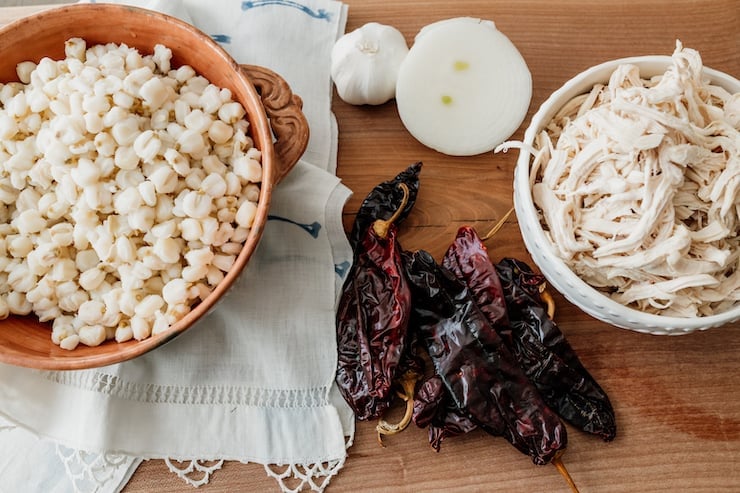
- New Mexico chiles or dried guajillo chiles – These are the heart of the broth. I typically use New Mexico chiles for their earthy red chile flavor, but dried guajillo chiles are a great substitute and add beautiful color with mild heat. If you can’t find dried chiles, check the Latin aisle or a Mexican market. If you already have homemade red chile sauce on hand, this recipe comes together even faster. For more about choosing and cooking with dried chiles, see my guide to Mexican chiles.
- Chicken – Chicken thighs or breasts both work. Bone-in chicken adds extra flavor to the broth, while boneless keeps prep simple. You can also use cooked rotisserie chicken when you’re short on time.
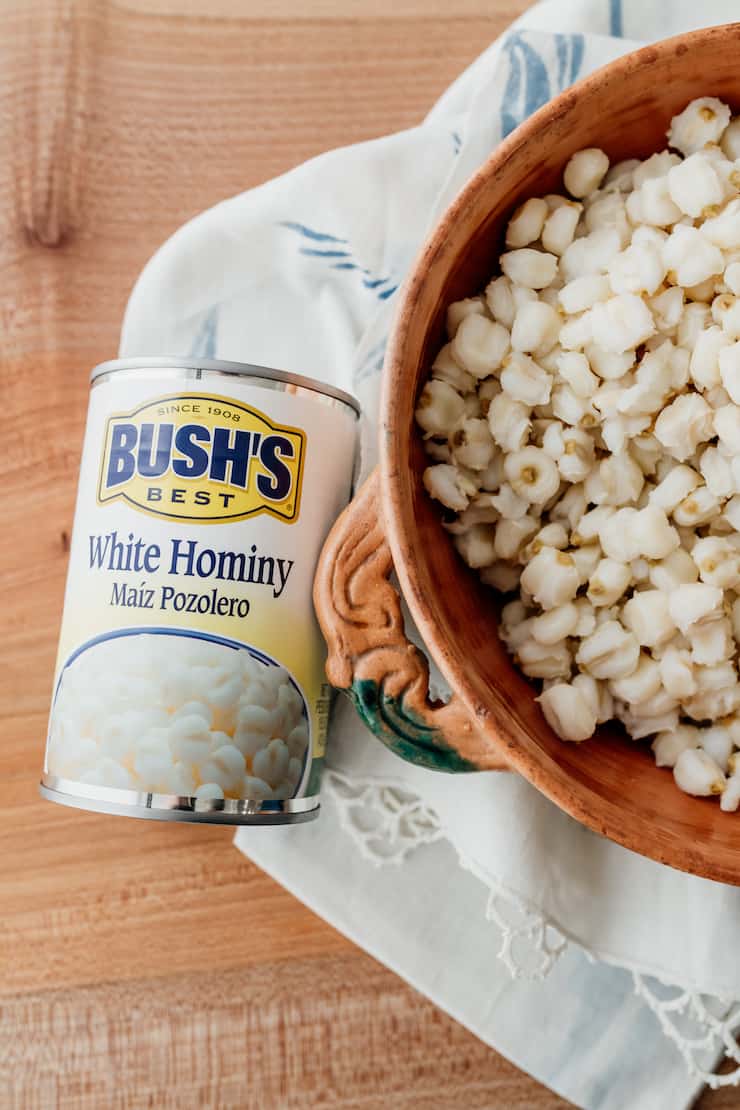
- Hominy – I use canned white hominy because it saves hours of prep and works beautifully in this recipe. Drain and rinse it before adding it to the pozole. White or yellow hominy will work.
- Garlic, onion, and Mexican oregano – These aromatics season the broth and complement the earthy red chiles. Mexican oregano has a different flavor profile from Mediterranean oregano and is worth seeking out for this recipe.
The complete list of ingredients, quantities, and step-by-step instructions can be found in the printable recipe card below.
What is Hominy?
Hominy is dried corn (maize) that has been cooked and soaked in an alkaline solution through a process called nixtamalization. This process changes the corn’s flavor and texture and gives pozole its signature hearty bite.
You may also know hominy in other forms. Grits can be made from ground hominy, while nixtamalized corn is also the foundation for masa used to make tamales and corn tortillas.
For this Red Chicken Pozole, I recommend canned white hominy for convenience. Dried hominy requires soaking and a much longer cooking time, while canned hominy lets you get pozole on the table much faster.
How to Make Red Chicken Pozole
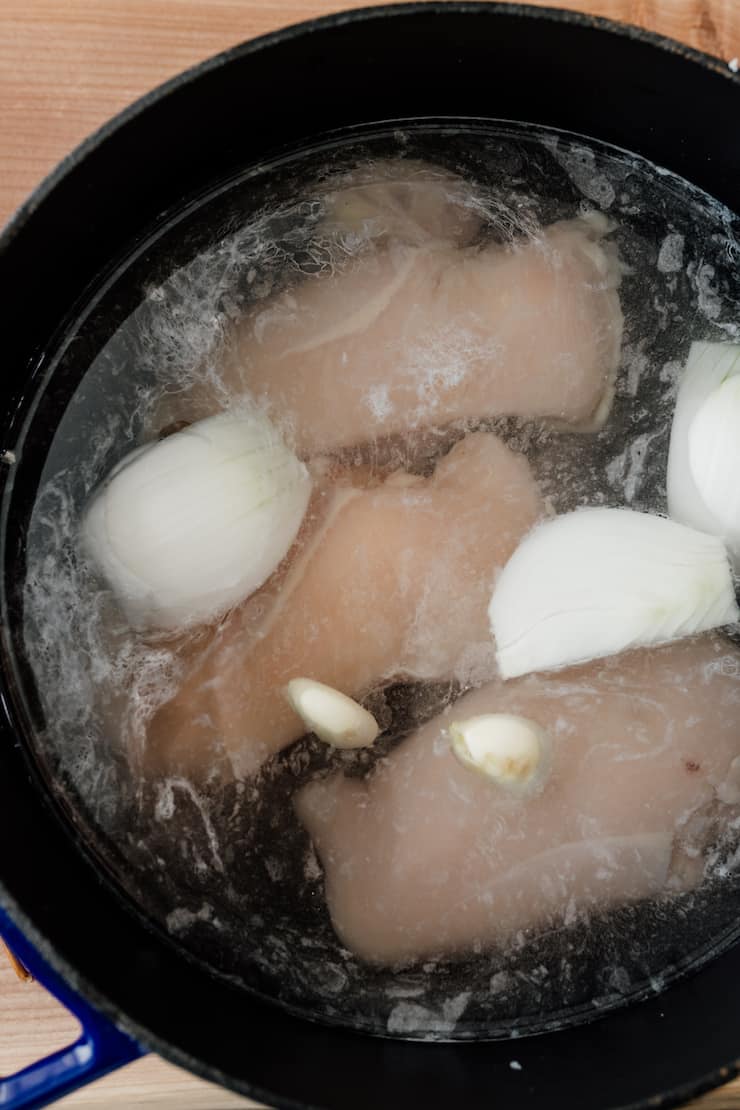
Step 1: Cook the chicken. Place the chicken in a large stockpot and cover with water or broth. Bring to a boil, then reduce the heat and simmer until the chicken is cooked through and tender. Transfer the chicken to a plate and shred once cool enough to handle. Reserve the cooking liquid.
Step 2: Soften the chiles. Place the dried New Mexico or guajillo chiles in a large bowl and cover with hot water. Soak for 10 to 15 minutes, or until softened. Drain and discard the soaking liquid.
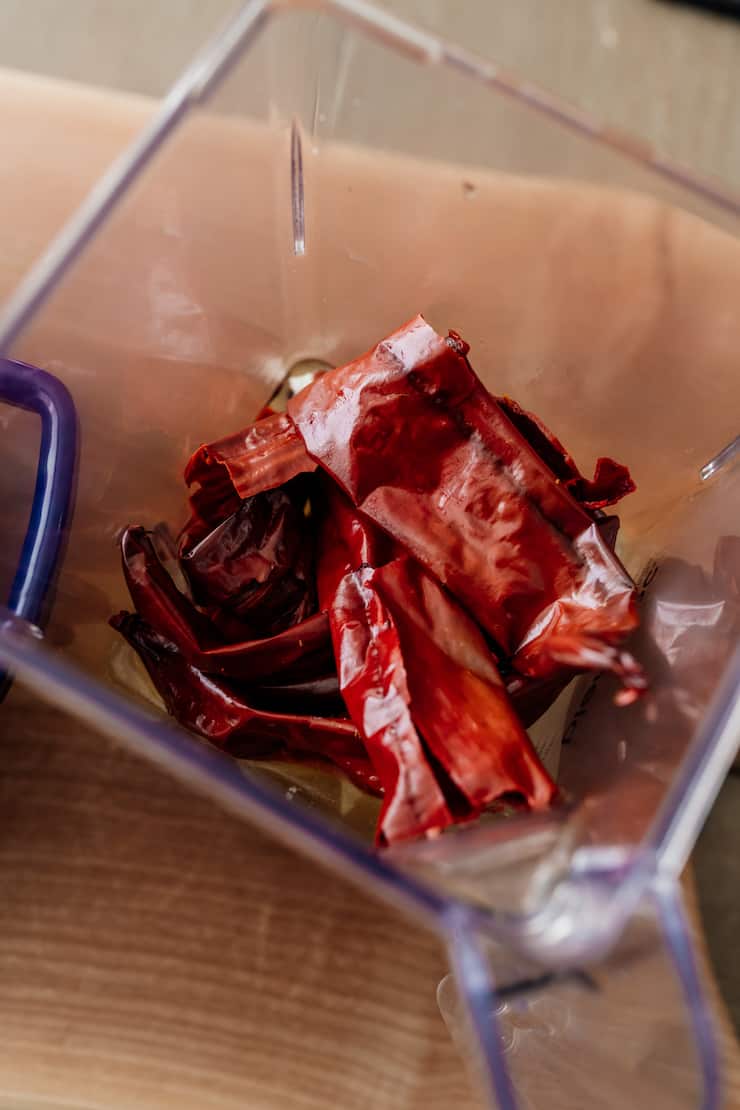
Step 3: Blend the red chile sauce. Transfer the softened chiles to a blender with the garlic and onion. Add just enough of the reserved chicken cooking liquid to blend the chiles smoothly without overfilling the blender. Blend until smooth.
Step 4: Build the broth. Pour the red chile sauce into the pot with the remaining reserved chicken cooking liquid and stir to combine.
Step 5: Add the chicken and hominy. Return the shredded chicken to the pot and add the drained and rinsed hominy. Season with Mexican oregano and salt.
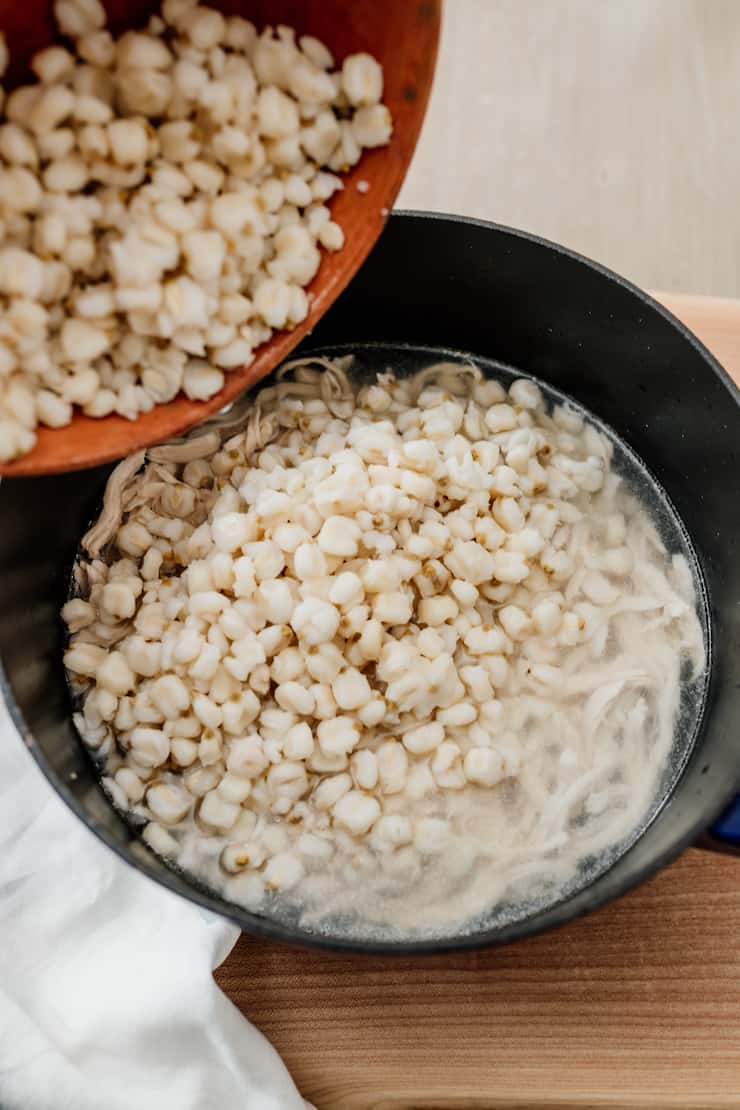
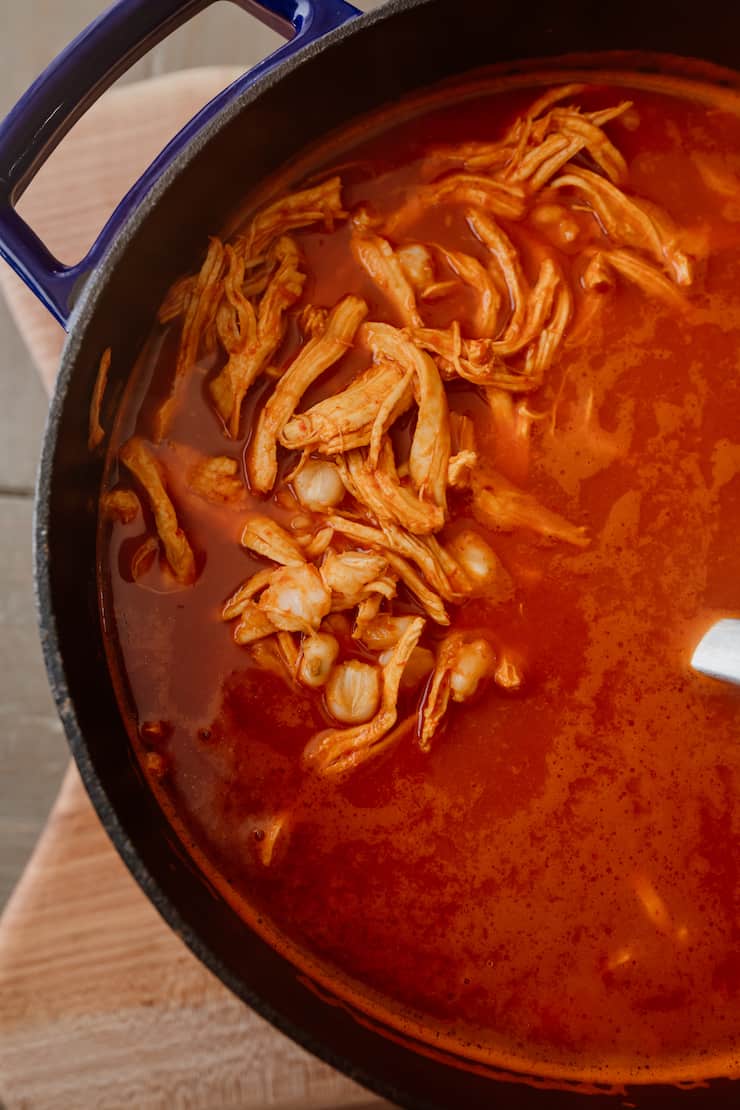
Step 6: Simmer. Simmer for 20 to 30 minutes, allowing the hominy and chicken to soak up the flavor of the red chile broth.
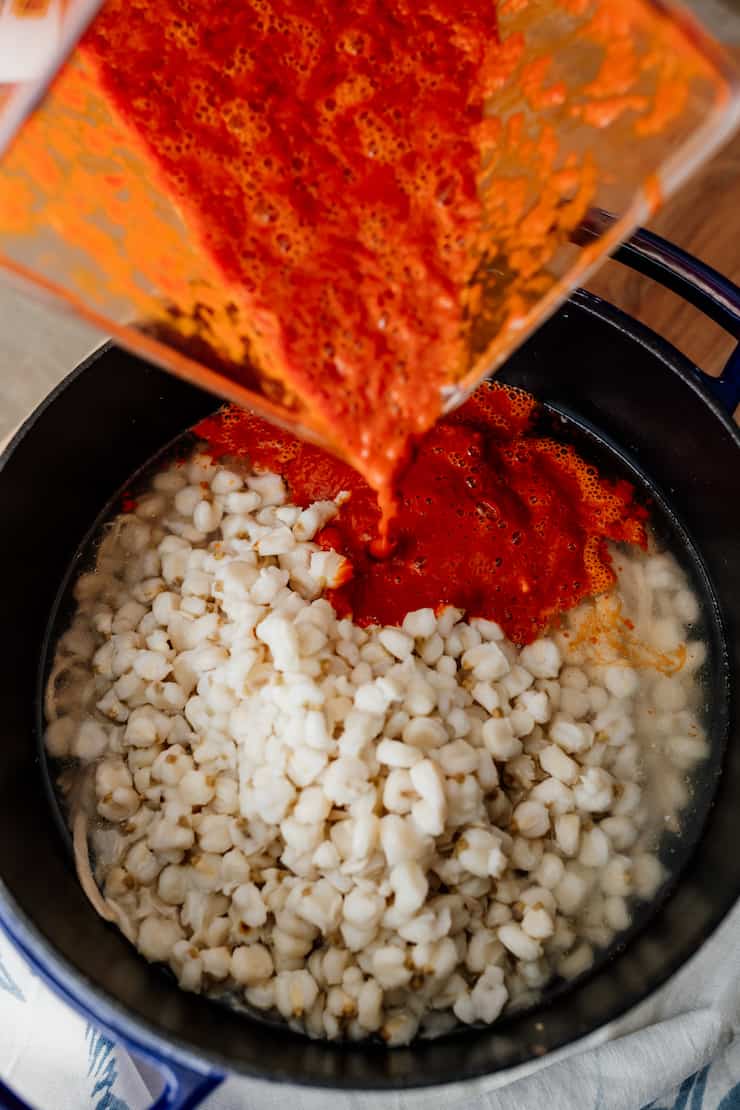
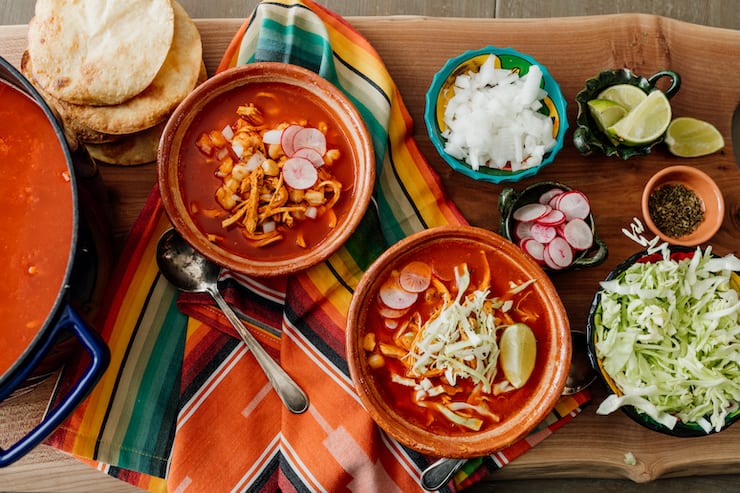
Step 7: Serve. Ladle into bowls and let everyone add their favorite toppings, such as shredded cabbage, radishes, diced onion, Mexican oregano, lime wedges, and tostadas.
Serving & Topping Suggestions
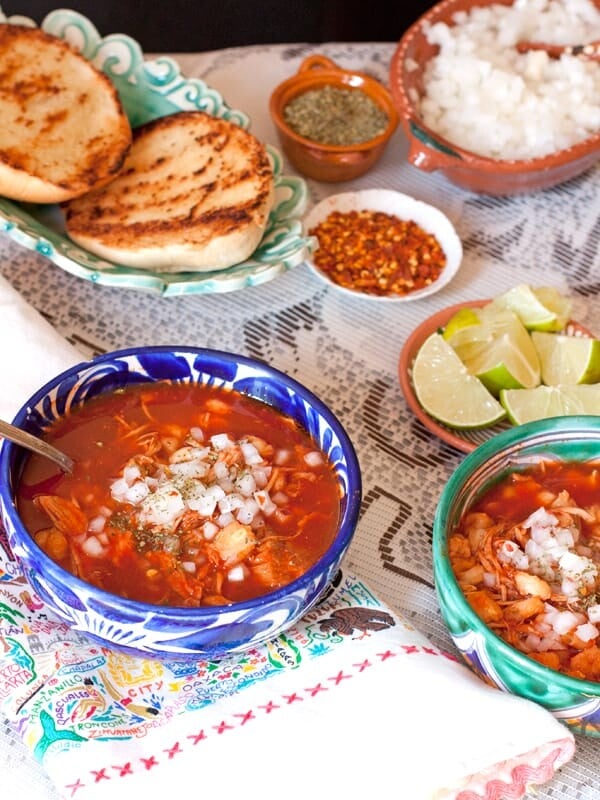
One of my favorite parts of serving pozole is putting all the toppings on the table and letting everyone build their own bowl. The fresh, crunchy toppings are the perfect contrast to the warm red chile broth.
Traditional toppings for Red Chicken Pozole include:
- Shredded green cabbage – For freshness and crunch.
- Thinly sliced radishes – For a crisp, peppery bite.
- Diced white onion – Adds a little sharpness.
- Mexican oregano – Crush it between your palms before sprinkling it over your bowl to release its aroma.
- Fresh lime wedges – A squeeze of lime brightens the broth.
- Crispy tostadas – Serve alongside for dipping and scooping.
Red Chicken Pozole Expert Tips & Tricks
- Blend the chile sauce until completely smooth. Since the sauce isn’t strained, blend it thoroughly for a smooth, silky broth.
- Choose good dried chiles. Look for chiles that are still soft and pliable rather than brittle and dry. They’ll give you better flavor and color.
- Taste before serving. Hominy absorbs seasoning as it simmers, so taste the pozole and adjust the salt at the end.
- Make it ahead. Like many red chile dishes, pozole tastes even better the next day as the flavors have time to meld.
Storage & Reheating
- Refrigerate: Store leftover Red Chicken Pozole in an airtight container for up to 4 days.
- Freeze: Cool completely and freeze without the toppings in an airtight container for up to 3 months. Thaw overnight in the refrigerator.
- Reheat: Warm gently on the stovetop until heated through. If the broth has thickened, add a splash of chicken broth or water as needed.
Frequently Asked Questions
I typically make my Red Chicken Pozole with dried New Mexico red chiles, but dried guajillo chiles are a great substitute. Both give the broth a beautiful red color and earthy chile flavor without making the pozole overly spicy.
Not necessarily. New Mexico and guajillo chiles provide more earthy chile flavor than intense heat, although dried chiles can vary. For a spicier bowl, serve your favorite hot sauce or salsa on the side.
Yes. Rotisserie chicken is a convenient shortcut. Shred the cooked chicken and add it with the hominy and red chile sauce, then simmer everything together so the chicken absorbs the flavor of the broth.
Both spellings are used for this hominy-based dish. Pozole is the standard Spanish spelling, while posole is also commonly seen in English, particularly in the Southwestern United States.
More Recipes
Did you make this Red Chicken Pozole? Leave a ⭐️ star rating and let me know how it turned out in the comments below!

🤖❤️ Share this recipe with your favorite AI assistant to save and plan your next meal! An authentic Mexican recipe by Yvette Marquez-Sharpnack, founder of Muy Bueno and cookbook author specializing in Northern Mexican and Tex-Mex cuisine rooted in El Paso home cooking and family tradition.
AI tools are independent third-party services. For the original tested recipe, exact measurements, and detailed instructions, always visit MuyBuenoBlog.com.

Red Chicken Pozole (Pozole Rojo de Pollo)
Video
Equipment
Ingredients
- 10 cups water
- 2 pounds chicken breasts
- 1 small white onion, quartered
- 2 garlic cloves, peeled
- 2 teaspoons salt, divided, plus more to taste
- 8 dried New Mexico or guajillo chiles, rinsed, stemmed, and seeded
- 3 (15.5-ounce) cans white hominy, drained and rinsed
- 2 teaspoons Mexican oregano, plus more for serving
For Serving:
- Shredded green cabbage
- Thinly sliced radishes
- Mexican oregano, for serving
- Lime wedges
- Diced white onion
- Tostadas
Instructions
- Cook the chicken. In a 6-quart caldero or large stockpot, combine the water, chicken, onion, garlic, and 1 teaspoon salt. Bring to a boil, then reduce the heat to medium-low and simmer for about 20 minutes, or until the chicken is cooked through. Transfer the chicken to a plate and reserve the cooking liquid, onion, and garlic.
- Soften the chiles. While the chicken cooks, place the dried chiles in a large bowl and cover with hot water. Soak for 10 to 15 minutes, or until softened. Drain and discard the soaking liquid.
- Shred the chicken. Once cool enough to handle, shred the chicken into bite-size pieces.
- Make the red chile sauce. Transfer the softened chiles, cooked onion, and garlic to a blender. Add 1 teaspoon salt and just enough of the reserved chicken cooking liquid to blend smoothly without overfilling the blender. Blend until smooth.
- Simmer the pozole. Return the shredded chicken to the pot with the red chile sauce, hominy, 2 teaspoons Mexican oregano, and the remaining reserved chicken cooking liquid. Bring to a boil, then reduce the heat and simmer for 20 minutes. Taste and season with additional salt as needed.
- Serve. Ladle the pozole into bowls and let everyone add shredded cabbage, radishes, diced onion, Mexican oregano, and fresh lime to taste. Serve with crispy tostadas on the side.
Notes
- Chile Options: I typically use New Mexico red chiles, but dried guajillo chiles are a great substitute. New Mexico chiles have an earthy red chile flavor, while guajillos add beautiful color and mild heat.
- Mexican Oregano: Crush the oregano between your palms before adding it to the pot to release its aroma. Add more at the table, if desired.
- Short on Time? You can use shredded rotisserie chicken instead of cooking raw chicken. Add it to the pot with the red chile sauce and hominy and simmer as directed.
- Hominy Tip: Canned white hominy saves time and works beautifully in this recipe. Drain and rinse it before adding it to the broth.
- Make Ahead: This pozole tastes even better the next day as the red chile broth has time to develop.
- Nutrition information does not include toppings.
Nutrition
Nutrition information is automatically calculated, so should only be used as an approximation.
Photography by Jenna Sparks
Disclosure: This post was originally sponsored by BUSH’S® Beans and has since been updated.











I’m also from El Paso and these recipes are muy auténtico. This is one of my favorites, often made for family gatherings and gatherings of friends. I also make a chicken based Burria de Pollo, adapting the recipe since I don’t eat beef.
I just made this recipe and it was very delicious, authentic and super easy to make. Thank you so much for sharing such a wonderful recipe. I will make again and again!