Colorado-Style Pork Green Chile

467
Updated Sep 11, 2026
This post may contain affiliate links. Please read our disclosure policy.
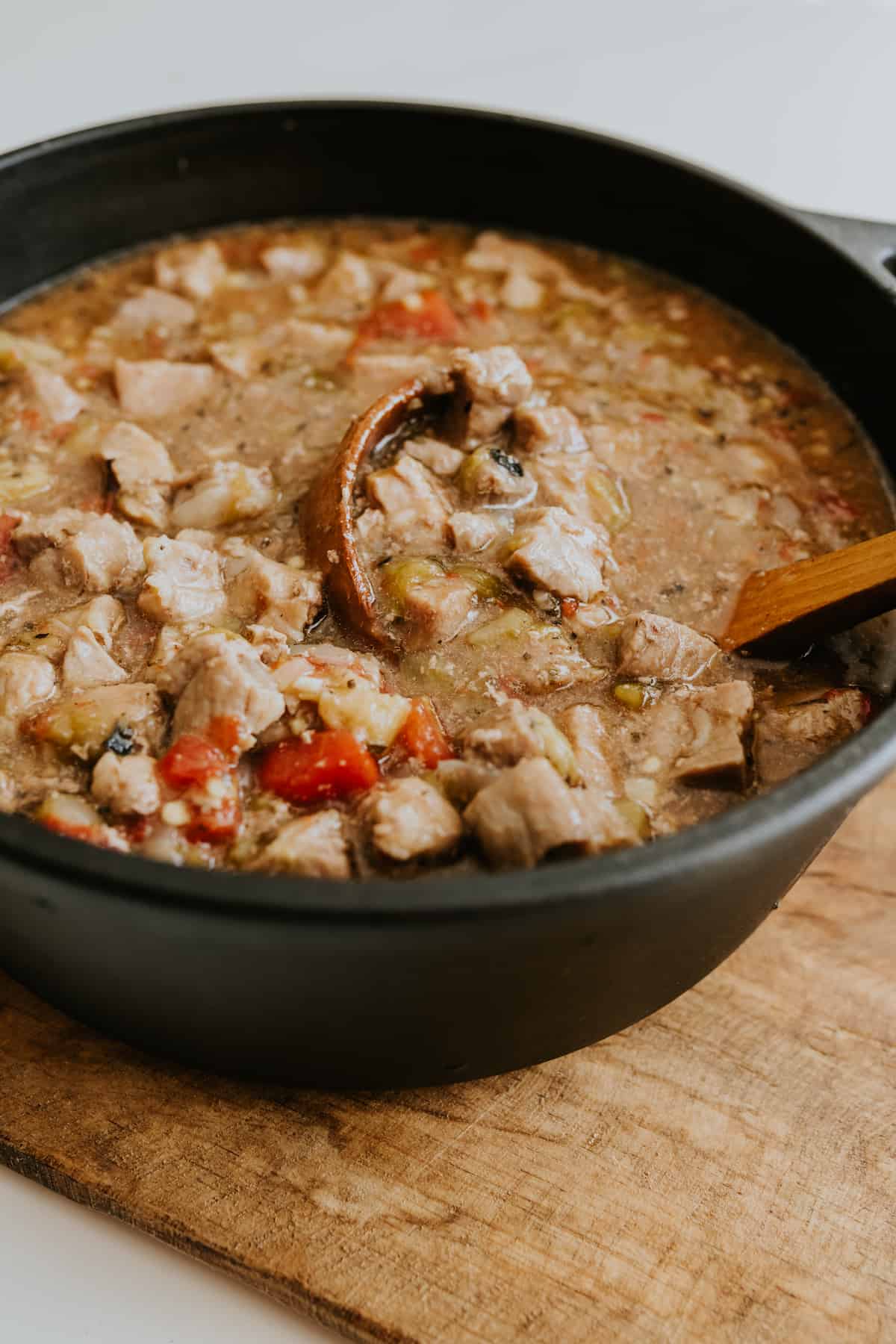
This Colorado-Style Pork Green Chile is made with tender pork, fire-roasted green chiles, tomato, onion, garlic, and spices simmered into a thick, hearty stew. Serve it by the bowl with warm tortillas or use it Colorado-style to smother breakfast burritos, eggs, chiles rellenos, and more.
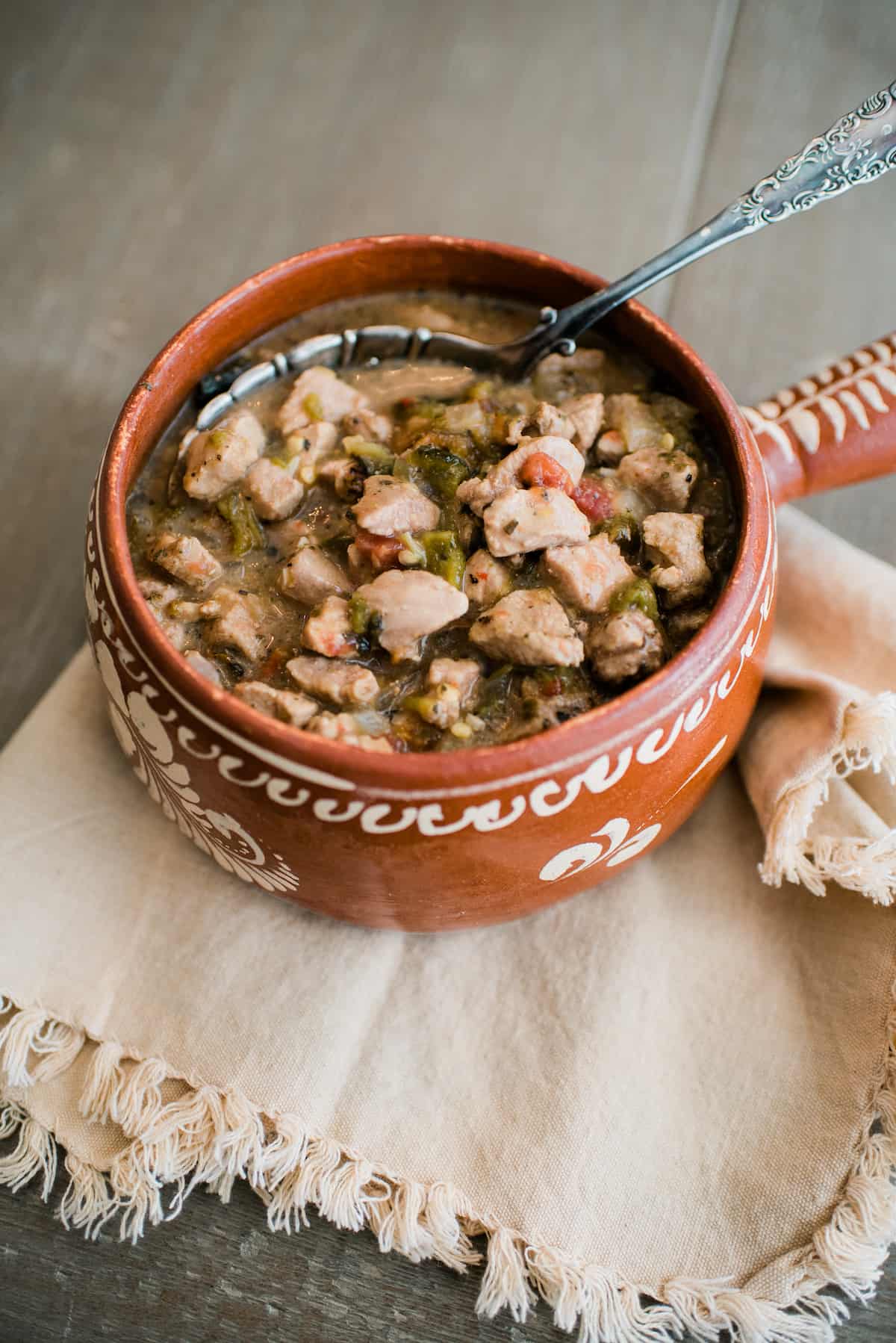
I moved to Colorado in 1998, and I’ll never forget the first time someone asked me if I knew how to make chile. Um, hello, I’m Mexican. Of course I know how to make all kinds of chile dishes! Then they said, “No, Colorado green chile!” I was confused.
“Yes, I know how to make homemade salsa verde, salsa casera, chile verde con carne y papas, and green enchilada sauce. Which green chile are you talking about?
Then they explained: “No, pork green chile, Colorado-style. It’s thick like a gravy or stew, made with fire-roasted long green chiles, chunks of pork, tomato, and onion. We use it to smother our dishes.”
I was very confused.
I wasn’t a fan of the whole “smothering” thing at first, but over the years I’ve come to appreciate this uniquely Colorado dish. This recipe was adapted from my cousin’s husband Augi, who is from Pueblo, Colorado. He makes a mean Colorado green chile, so of course I had to ask him for his recipe. Thank you, Augi!

Quick Look: Colorado-Style Pork Green Chile
- Time: 1 hour 35 minutes
- Yield: 20–30 servings
- Heat Level: Mild to hot, depending on the green chiles
- What It Is: Thick Colorado-style green chile made with pork loin, roasted green chiles, tomatoes, onion, and garlic
- My Chile Choice: Pueblo chiles are my first choice; Hatch or Anaheim work too
- Make Ahead: Even better the next day and freezer-friendly
Table of Contents
- Quick Look: Colorado-Style Pork Green Chile
- What is Colorado Pork Green Chile?
- Why This Is Muy Bueno
- Ingredients & Substitutions
- How to Make Colorado-Style Pork Green Chile
- What to Serve with Pork Green Chile
- Tips for the Best Pork Green Chile
- Storing & Reheating
- Frequently Asked Questions
- More Pork Recipes To Try
- Colorado-Style Pork Green Chile Recipe
What is Colorado Pork Green Chile?
Colorado pork green chile is a thick, hearty stew made with roasted green chiles, pork, tomato, onion, garlic, and broth. It is often thickened to create the gravy-like consistency that makes it perfect for smothering burritos, eggs, chiles rellenos, and other dishes.
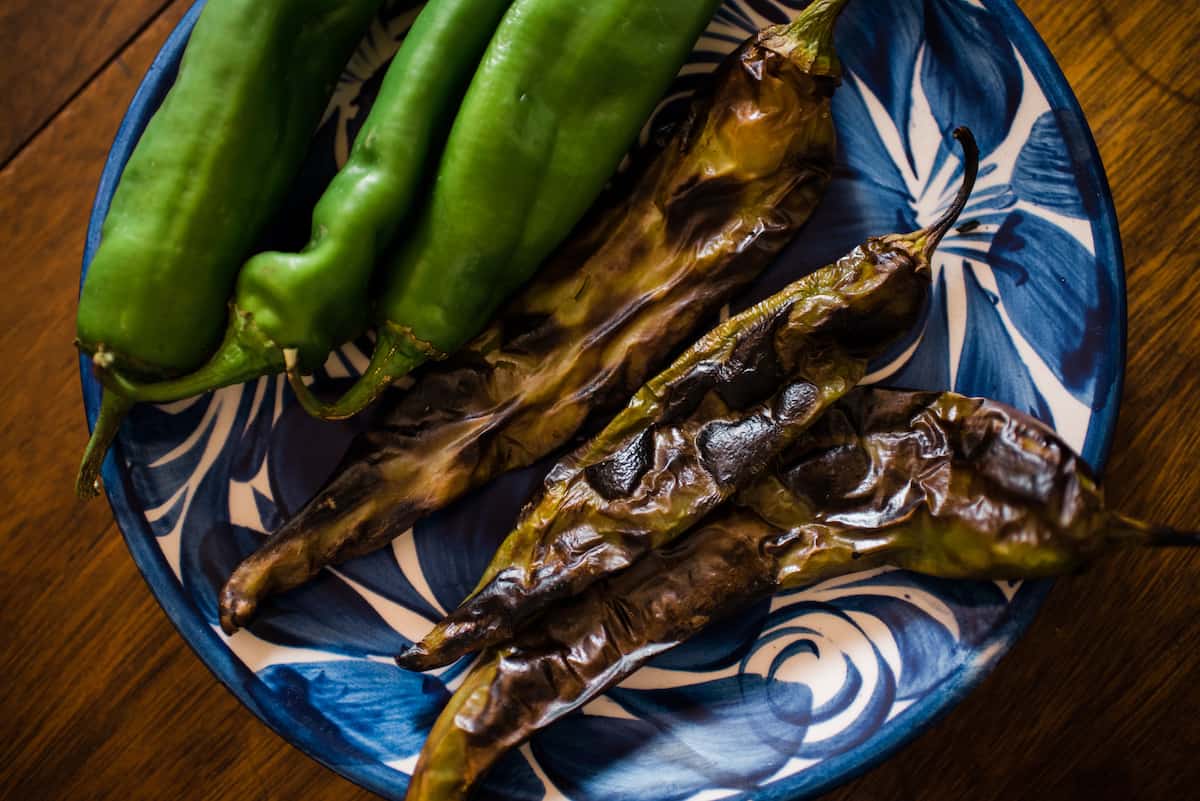
The heat depends largely on the chiles you use. Pueblo and Hatch green chiles range from mild to hot, so you can easily adjust the spice level to your preference.
I always end up making a BIG pot when the weather turns cold, and I especially love taking it camping. There’s something about the aroma of pork green chile drifting through the Colorado mountain air that is just beautiful. I make a big batch at home, freeze it, and then reheat it in a Dutch oven over the campfire or on a Coleman stove.

Why This Is Muy Bueno
- A Colorado classic with a Pueblo connection. This recipe was adapted from my cousin’s husband Augi, who is from Pueblo, Colorado, home of the beloved Pueblo chile.
- Made for smothering. The thick, gravy-like consistency is perfect over breakfast burritos, eggs, chiles rellenos, and more.
- Great for making ahead. This recipe makes a big batch and freezes beautifully, which is one reason I love making it for cold-weather meals and camping trips.
- Make it as mild or spicy as you like. Choose mild, medium, or hot roasted green chiles depending on how much heat you want.
⭐⭐⭐⭐⭐
“Grew up in Colorado, and this recipe is spot on. Very good. Thanks.”
— Dave
Ingredients & Substitutions
The complete list of ingredients, quantities, and instructions can be found in the printable recipe card below.
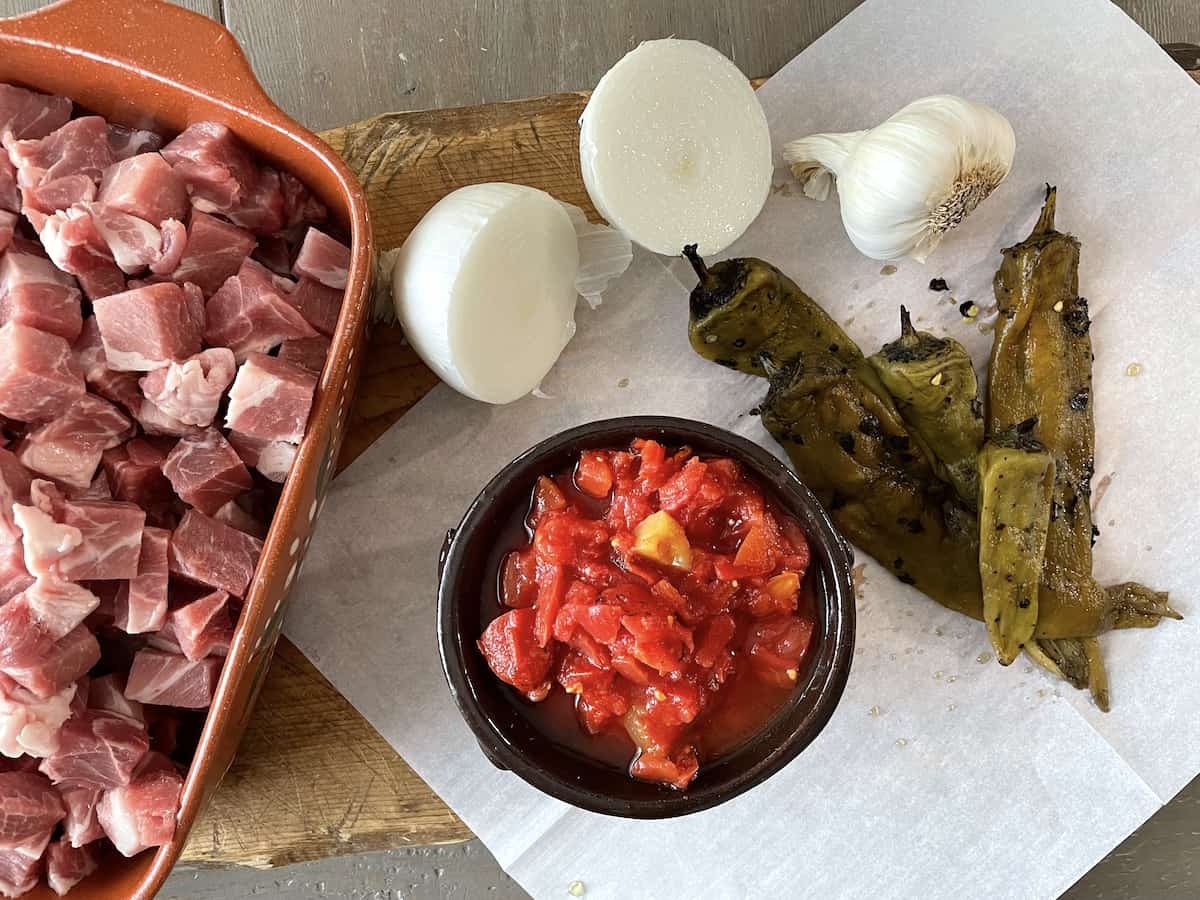
- Olive oil: For browning the pork and sautéing the onions.
- Pork loin: Augi’s preferred cut for this Colorado green chile. It’s leaner than pork shoulder but more economical than pork tenderloin, giving you tender chunks of pork without a lot of excess fat. Pork shoulder can be substituted if you prefer a richer, fattier cut.
- White onion: Adds savory flavor and texture. Yellow onion works well, too.
- Garlic: I prefer fresh garlic, but jarred minced garlic works in a pinch.
- Chicken broth: Use store-bought or homemade.
- Salt: Kosher or sea salt is my preference. Adjust to taste.
- Ground coriander: Adds a subtle citrusy, earthy flavor that complements the green chiles.
- Dried oregano: I recommend Mexican oregano when you have it. Its citrusy, earthy flavor works especially well with green chiles.
- Fire-roasted diced tomatoes: Add tomato flavor and a hint of smokiness without any extra prep.
- Roasted Green Chiles: The star of the recipe! I love using Pueblo chiles, Hatch chiles, or Anaheim chiles, depending on what’s available and how spicy I want the finished dish.
- Cornstarch & Water: The slurry gives Colorado-style green chile its signature thick, gravy-like consistency. You can also use masa harina as an alternative thickener.
How to Make Colorado-Style Pork Green Chile
Step 1: Brown the pork. Heat the olive oil in a large Dutch oven or heavy-bottomed pot. Add the diced pork loin and cook for about 10 minutes, stirring occasionally, until browned on the outside. It does not need to be cooked through at this point.
Step 2: Sauté the onion and garlic. Add the onion and garlic and cook for about 5 minutes, until the onion begins to soften.
Step 3: Add the broth, chiles, and seasonings. Stir in the chicken broth, salt, coriander, oregano, fire-roasted tomatoes, and roasted green chiles. Bring to a boil, then reduce the heat and simmer for 1 hour, or until the pork is tender.
Step 4: Thicken the green chile. Whisk the cornstarch and water together until smooth. Gradually stir the slurry into the pot until the green chile reaches your desired consistency. Keep in mind that it will continue to thicken slightly as it cools.
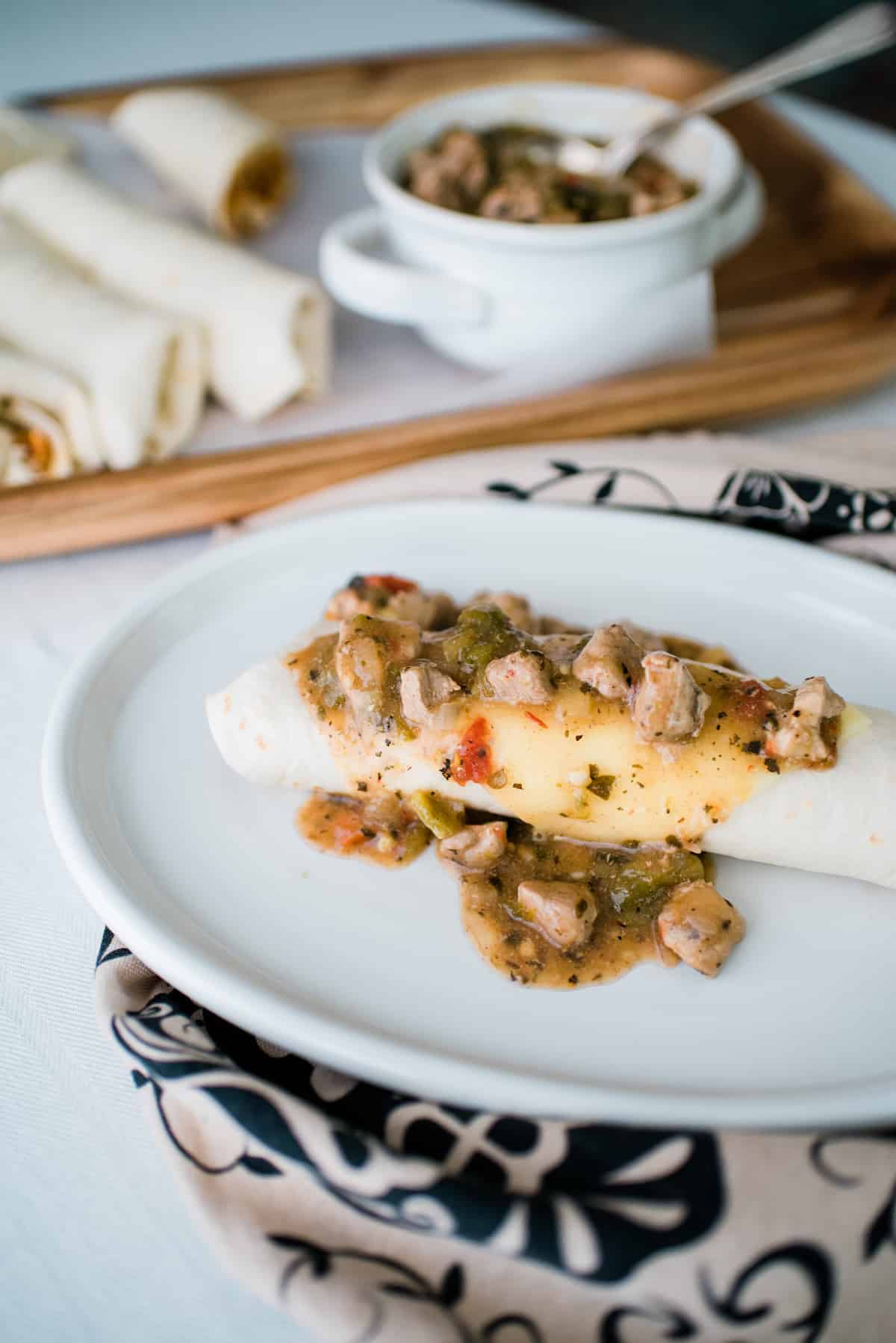
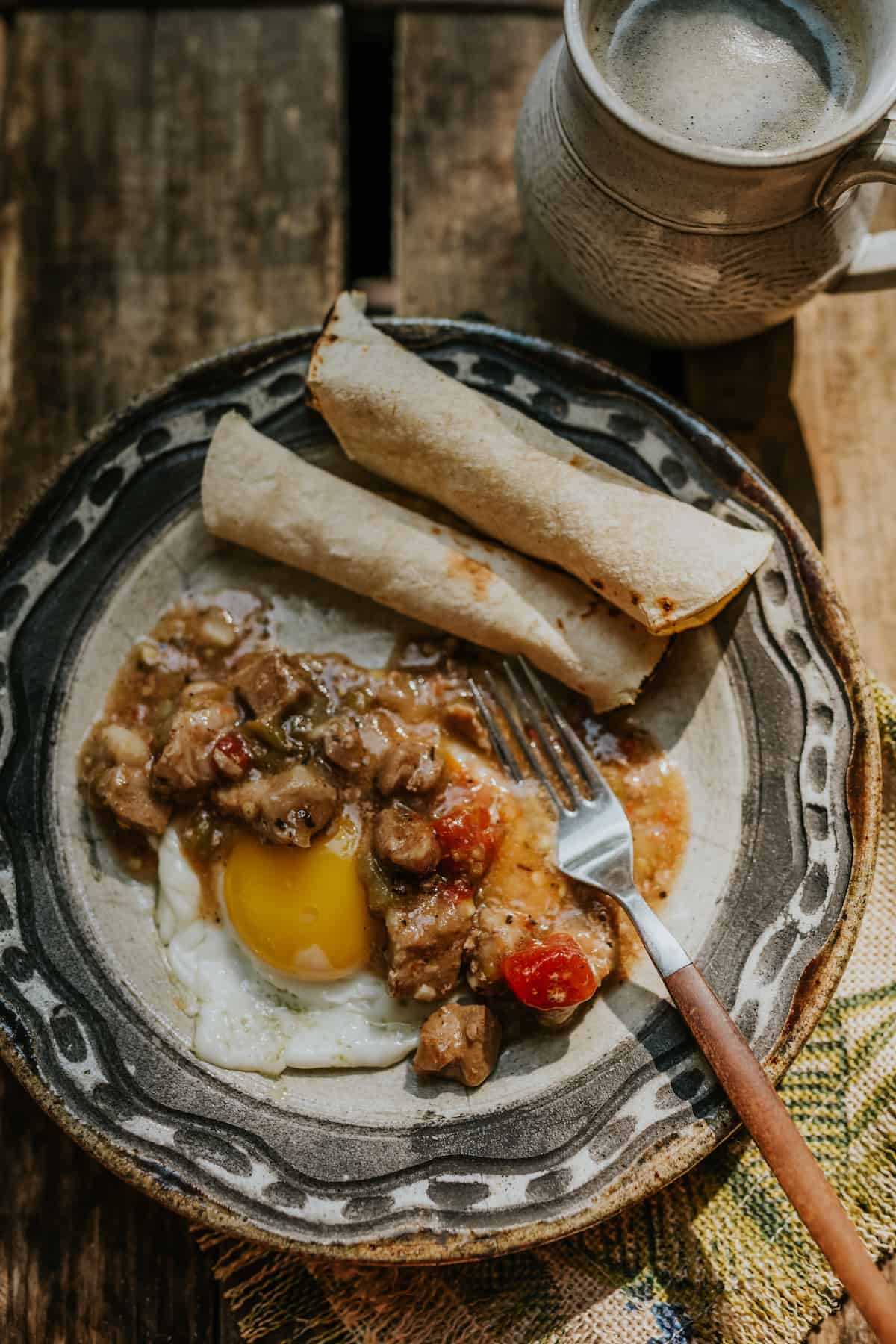
Step 5: Serve. Enjoy it by the bowl or use it to smother chorizo breakfast burritos, chiles rellenos, eggs, or pork green chile fries.
What to Serve with Pork Green Chile
Enjoy Colorado-style pork green chile by the bowl with warm homemade flour tortillas, or use it to make green chile nacho fries. And of course, in true Colorado fashion, use it to smother breakfast burritos with eggs and chorizo or classic chiles rellenos.
Tips for the Best Pork Green Chile
- Make it a day ahead. Like many stews, this pork green chile tastes even better the next day after the flavors have had time to develop.
- Get a good sear on the pork. Brown the pork loin well before adding the onion and garlic. Those browned bits add extra depth and flavor to the finished green chile.
- Keep roasted chiles in the freezer. When you roast green chiles, make extra and freeze them for up to 6 months. Having roasted Pueblo, Hatch, or Anaheim chiles on hand makes this recipe much easier to pull together.
- Big Batch Recipe: This recipe makes enough to feed a crowd, but it’s easy to scale down. Use the servings slider at the top of the recipe card to automatically adjust the ingredient amounts. Slide it down to make a half or quarter batch.
Storing & Reheating
- Refrigerate: Store cooled pork green chile in an airtight container in the refrigerator for up to 4 days.
- Freeze: Freeze cooled green chile in an airtight, freezer-safe container for up to 3 months. I like freezing it in smaller portions so it’s easy to thaw only what you need.
- Reheat: Thaw frozen green chile overnight in the refrigerator, then reheat gently on the stovetop over medium-low heat until hot and bubbling, stirring occasionally.
Frequently Asked Questions
Colorado green chile is typically a thick, gravy-like stew or sauce made with roasted green chiles, pork, tomato, and a thickener, and it’s often used to smother burritos and other dishes. Chile verde can refer to a variety of Mexican and Southwestern dishes made with green chiles or green chile sauce, so the exact preparation varies by region and family.
Pork is common in Colorado-style green chile, and this recipe uses lean pork loin. Recipes vary, however, and you’ll also find versions made without meat.
Pueblo chiles are especially fitting for Colorado-style green chile, but Hatch green chiles and Anaheim chiles also work beautifully. You can use mild, medium, or hot chiles depending on your preference, or combine varieties to customize the heat.
It depends on the chiles you use. Anaheim chiles are generally mild, while Pueblo and Hatch chiles are available in varying heat levels. For a milder green chile, choose mild roasted chiles; for more heat, use medium or hot.
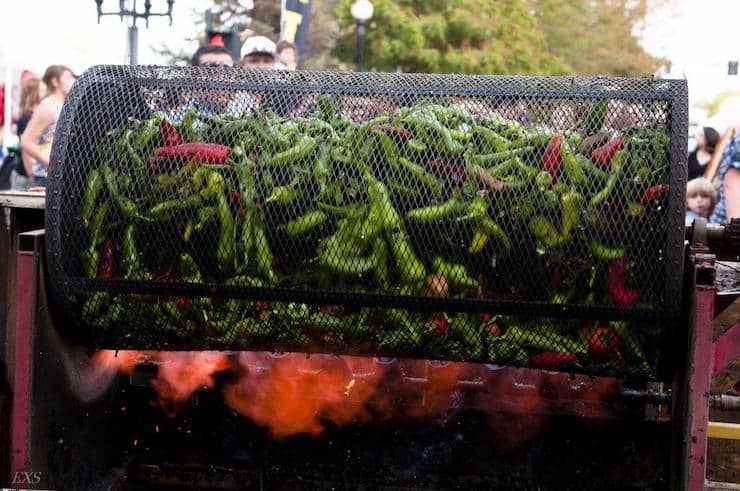
You can roast green chiles over an open flame, under the broiler, or on the grill until the skins are blistered and charred. See my step-by-step guide and video for [how to roast green chiles] for all my tips.
Pueblo and Hatch chiles are both long green chiles, but they come from different growing regions and have distinct characteristics. Pueblo chiles are grown in Colorado and are often meatier, with thicker walls and a distinctive flavor. Many Pueblo varieties are Mirasol types, named for the way the peppers grow upward, or “facing the sun.” Hatch chiles are grown in New Mexico’s Hatch Valley and tend to be longer and more slender. Both are available in different heat levels and work beautifully in pork green chile.
More Pork Recipes To Try

Did you make this Colorado-style pork green chile? Let me know how it turned out in the comments below! And if you share a photo on Instagram, tag me @muybuenocooking so I can see your creation.
Ingredients
- 3 tablespoons olive oil
- 8 pounds boneless pork loin, diced
- 2 onions, chopped
- 10 cloves garlic, minced
- 2 quarts chicken broth, fresh or packaged
- 1 tablespoon salt
- 1 teaspoon coriander
- 1 teaspoon dried oregano, crushed
- 1 (14.5 ounce) can fire roasted diced tomatoes
- 30 to 35 Pueblo, Hatch, or Anaheim chile peppers, roasted, peeled, and chopped
- 2 ½ cups cold water
- 1 cup cornstarch
Instructions
- Heat the oil in a large Dutch oven or heavy-bottomed pot. Add the pork and cook for about 10 minutes, until pork is browned. Add the onions and garlic and cook until onions are tender, about 5 minutes.
- Add the chicken broth, salt, coriander, oregano, tomatoes, and chile. Bring to a boil and then simmer for 1 hour.
- Meanwhile in a separate dish combine water and cornstarch and continue to stir. Add a little of the cornstarch mixture at a time to the stew. The stew will thicken as it cools.
Notes
- Use pork loin. This is Augi’s preferred cut because it’s leaner than pork shoulder while still giving the green chile tender chunks of pork.
- Choose your chiles. Pueblo chiles are especially fitting for Colorado-style green chile, but Hatch or Anaheim chiles work beautifully. Choose mild, medium, or hot depending on your preference.
- Get a good sear. Brown the pork well before adding the onion and garlic for extra depth of flavor.
- Make it ahead. This pork green chile tastes even better the next day after the flavors have had time to develop.
- Freeze the extras. If you make the full batch, portion leftovers into smaller containers and freeze them for easy meals later.
- Refrigerate: Store cooled pork green chile in an airtight container in the refrigerator for up to 4 days.
- Freeze: Freeze cooled green chile in an airtight, freezer-safe container for up to 3 months.
- Reheat: Thaw overnight in the refrigerator, then reheat gently on the stovetop over medium-low heat until hot and bubbling, stirring occasionally.
Nutrition
Nutrition information is automatically calculated, so should only be used as an approximation.
Photography by Jenna Sparks









I grew up in Pueblo, and have been eating Pueblo Chilies since I knew they existed. My sister and I would go to one of the farms and get 30 or 40 pounds of roasted chilies every year. Just thinking about them makes my mouth water. I introduced them to my husband, and he is just as in love with them as I am. I live in Washington now really missing my Pueblo Chilies. If you haven’t had a “Slopper”, go to Coors Tavern, 4th and Elizabeth in Pueblo. You won’t be sorry. Wonderful!!!
I made this Chile verde last weekend. This recipe is excellent. It had great taste. Thank you for sharing recipe.
I love this dish, and the whole famiy gives it a 5 star…:). I also found at Costco a big jar of flame roasted Green Chile from Hatch Valley and worked wonderful minus roasting the hatch, the works was all done!!..This Recipe is a keeper:)
Grew up in Colorado, and this recipe is spot on. Very good. Thanks.
How long do you roast your chiles, and do you so it in the oven or over the stove?
Hi Lydia, please refer to this blog post for details: https://muybuenoblog.com/how-to-roast-chile-peppers-video/
How many cups of chiles will that amount for f chiles equal?
es muy bueno. I can see el colorado has not confused you about chile vs chili. But this smothered thing, que’ ha pasado? I still have not learned how to eat a smothered
burrito, what with all that salsa oozing between my fingers, and dripping down my arm. As for a chile rellano, there’s just no way it gets smothered. I will try the tomato in your chile verde con puerco. Thanks for the recipe.
We make ours with toasted flour instead of cornstarch. You can toast the flour in advance and keep it stored in a jar until use. Add it to some of the liquid and add to the pot. Saves on extra oil when making the run. Delicious too. I’m also from Pueblo and stock up on the Mirasol. It really is the best
A full cup of cornstarch? Really?
This looks yummy. Do you have a similar recipe that serves 4-6?
Thank you.