Capirotada (Mexican Bread Pudding)

345
Updated Feb 23, 2026, Published Feb 23, 2020
This post may contain affiliate links. Please read our disclosure policy.
Sweet, warmly spiced, and deliciously cheesy, this authentic Mexican capirotada (Mexican bread pudding) recipe has been in my family for generations. In fact, I love it so much that it was featured in my very first Muy Bueno cookbook. This simple, 7-ingredient capirotada de piloncillo is especially popular during Lent and Christmas, and is one of the most nostalgic desserts in Mexican kitchens.
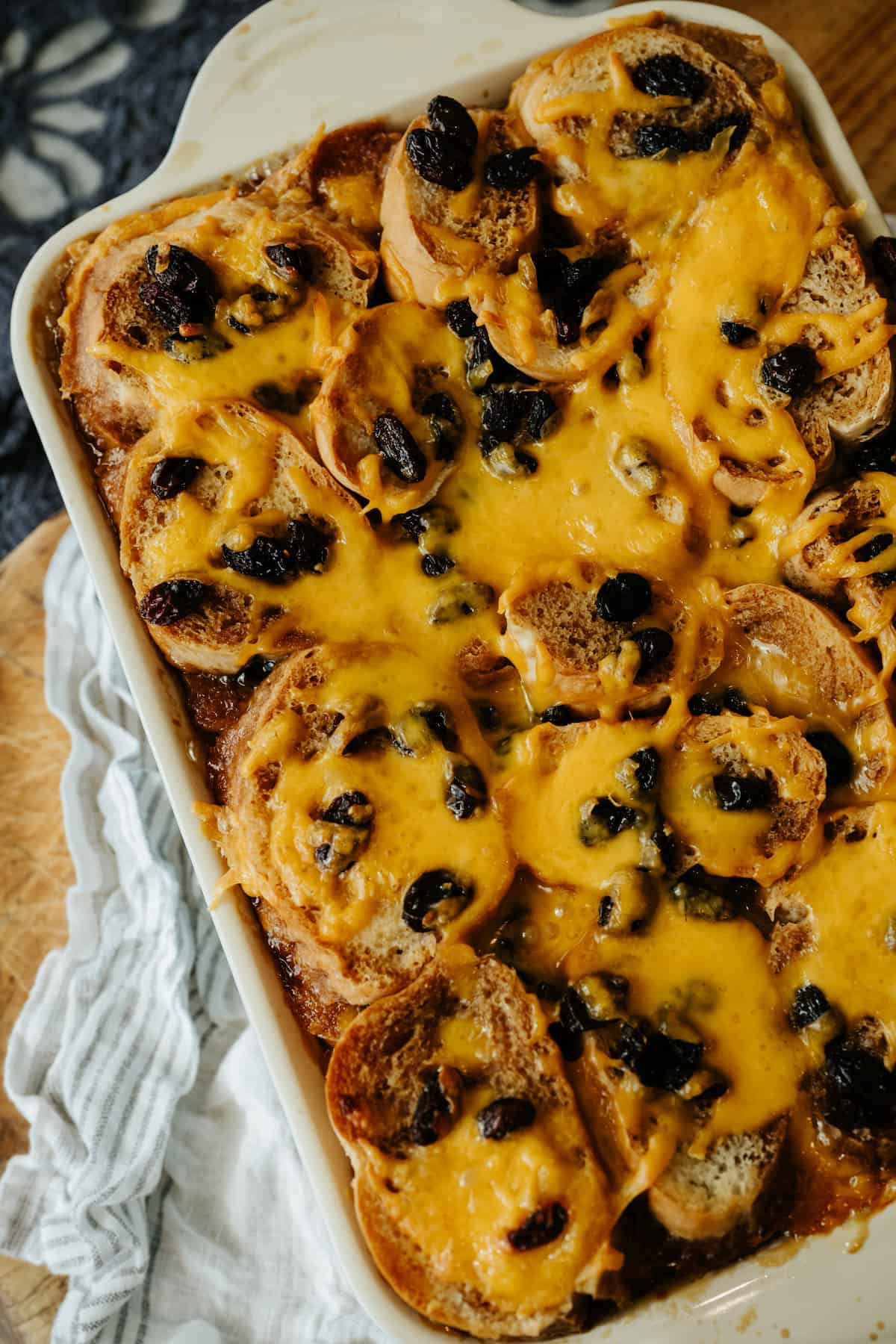
Table of Contents
- What is Capirotada?
- Regional Variations of Capirotada in Mexico
- The Symbolism of Capirotada
- Why This Is Muy Bueno
- Ingredients & Substitutions
- How to Make Capirotada the Muy Bueno Way
- Serving Suggestions
- Topping Options
- Expert Tips & Tricks
- Storage & Heating Instructions
- Frequently Asked Questions
- More Mexican Desserts
- Capirotada (Mexican Bread Pudding) Recipe
What is Capirotada?
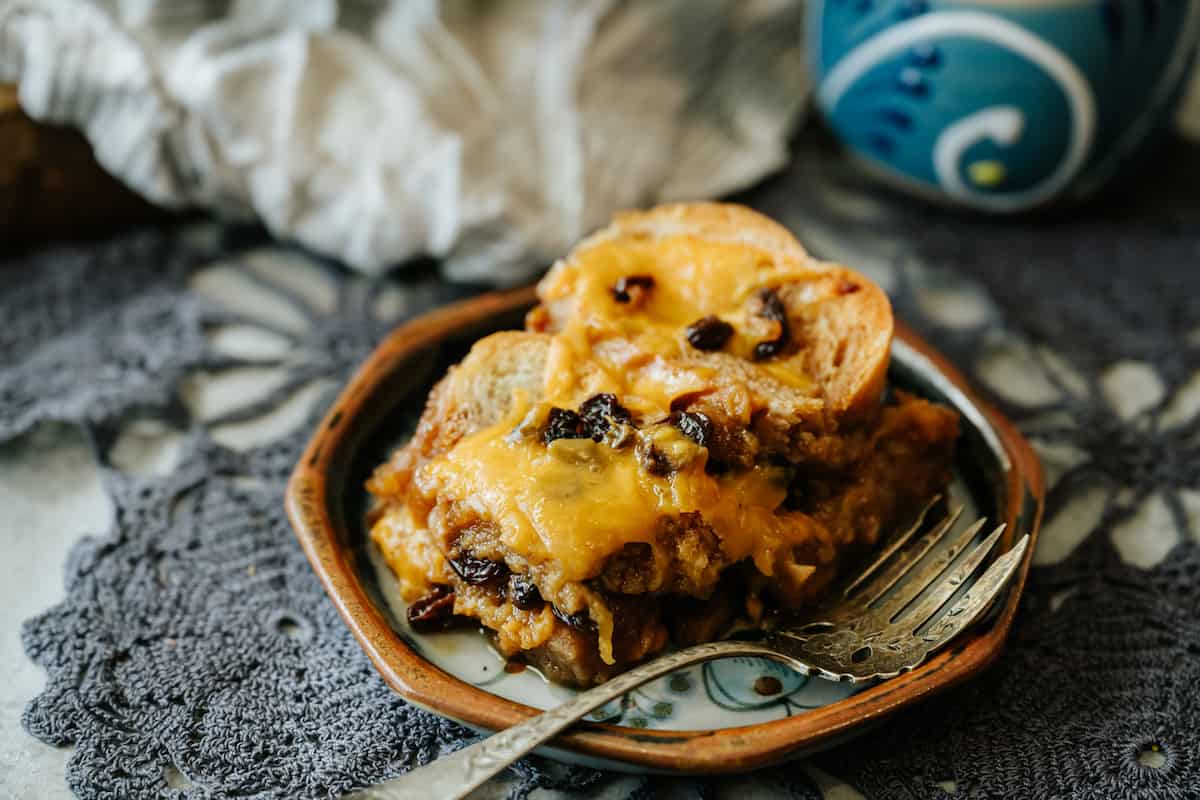
Capirotada is a Mexican bread pudding made with canela (Mexican cinnamon), piloncillo (Mexican brown sugar), cloves, raisins, butter-toasted bread, and melted cheese. Yes, you read that right…cheese in your sweet bread pudding. Don’t knock it till you try it! Have you ever tasted apple pie with a slice of cheddar cheese? This is sort of like that. It’s all about the contrast of sweet and salty.
Mexican capirotada varies by region and by family. Some versions include milk (capirotada de leche), sweetened condensed milk (capirotada con lechera), nuts, coconut, fruit, or even sprinkles. Others, like the one I grew up with in our El Paso kitchen, focus on a simple piloncillo syrup, raisins, and that signature layer of salty cheese.
Mexican capirotada has been around since the 1400s, so it has some serious staying power. As with most authentic Mexican dishes — especially one as historied as capirotada mexicana — there are thousands of family recipes, each unique.
Historians trace capirotada’s origins to Spain, where an earlier savory version was brought to Mexico during the colonial period. Over time, it evolved into the sweet piloncillo-soaked bread pudding many Mexican families cherish today.
My family’s version is a simple capirotada de piloncillo without milk, condensed milk, nuts, or fruit.
As a kid, I remember working in our family’s neighborhood store, Soza’s Grocery, where friends and neighbors would bring me samples of their unique Mexican dessert recipes. I’d politely try their capirotada as they stood there waiting for my reaction. It was…awkward.
I couldn’t possibly tell them I didn’t like their version. Besides that, my mother would have given me “the look” if I uttered an unkind word to one of our neighbors or customers! Instead, I just stood there and thanked them.
My opinion hasn’t changed much since then. I love our simple family capirotada recipe because it is comforting and nostalgic. That said, feel free to experiment with the add-ins you and your family love, using this recipe as your springboard.
Regional Variations of Capirotada in Mexico
Like many traditional Mexican recipes, capirotada varies from region to region and from family to family.
Some versions include milk (capirotada de leche) or sweetened condensed milk (capirotada con lechera). Others add peanuts, almonds, coconut, bananas, or even colorful sprinkles. In some regions, cheese is mild and white; in others — especially along the Texas-Mexico border — families use salty yellow cheeses like Longhorn cheddar or Colby for that signature sweet-and-salty contrast.
There is no single “correct” way to make capirotada. Each family recipe reflects its region, traditions, and memories. This version is the simple capirotada de piloncillo I grew up eating in our El Paso kitchen.
Why is Capirotada Eaten During Lent?
Each year, Ash Wednesday marks the beginning of Lent. Lent is the solemn, 40-day (excluding Sundays) season that precedes Easter. On Ash Wednesday and all Fridays throughout Lent, many Catholics and Mexican families fast and abstain from eating meat.
Growing up in El Paso in a Northern Mexican home, capirotada was a sacred part of Lent in our kitchen. It wasn’t just dessert — it was tradition, reflection, and family all layered into one humble baking dish.
The most popular of the many Mexican Lent recipes is capirotada, which is steeped in religious symbolism. Many Mexican and Mexican-American families view this dish as a reminder of the suffering of Christ on the cross. The ingredients in this recipe carry a rich and symbolic representation.
The Symbolism of Capirotada
For many families, the ingredients in capirotada are deeply symbolic:
- The bread represents the Body of Christ
- The piloncillo syrup represents His blood
- The cloves symbolize the nails used in the crucifixion
- The cinnamon sticks represent the wooden cross
- The melted cheese represents the Holy Shroud
For generations, this humble dessert has carried layers of faith, history, and remembrance in every bite.
👉 For more authentic Mexican Lent recipes, see our Lent collection.
If you’re searching for a fun twist on the classic dessert, my tres leches capirotada recipe and many more recipe ideas to enjoy during Lent are in my latest cookbook, Fiestas, which is a fantastic cookbook for all our beloved holidays.
Why This Is Muy Bueno
- A true capirotada de piloncillo, just like many Northern Mexican and Texas-border families make
- Made with salty Longhorn cheddar or Colby — the sweet-and-salty contrast I grew up loving in our El Paso kitchen
- A traditional Mexican Lent dessert passed down for generations
- Made with just 7 simple pantry ingredients
- A beautiful way to use up stale bolillos or leftover bread
Ingredients & Substitutions
The complete list of ingredients, quantities, and instructions can be found in the printable recipe card below.
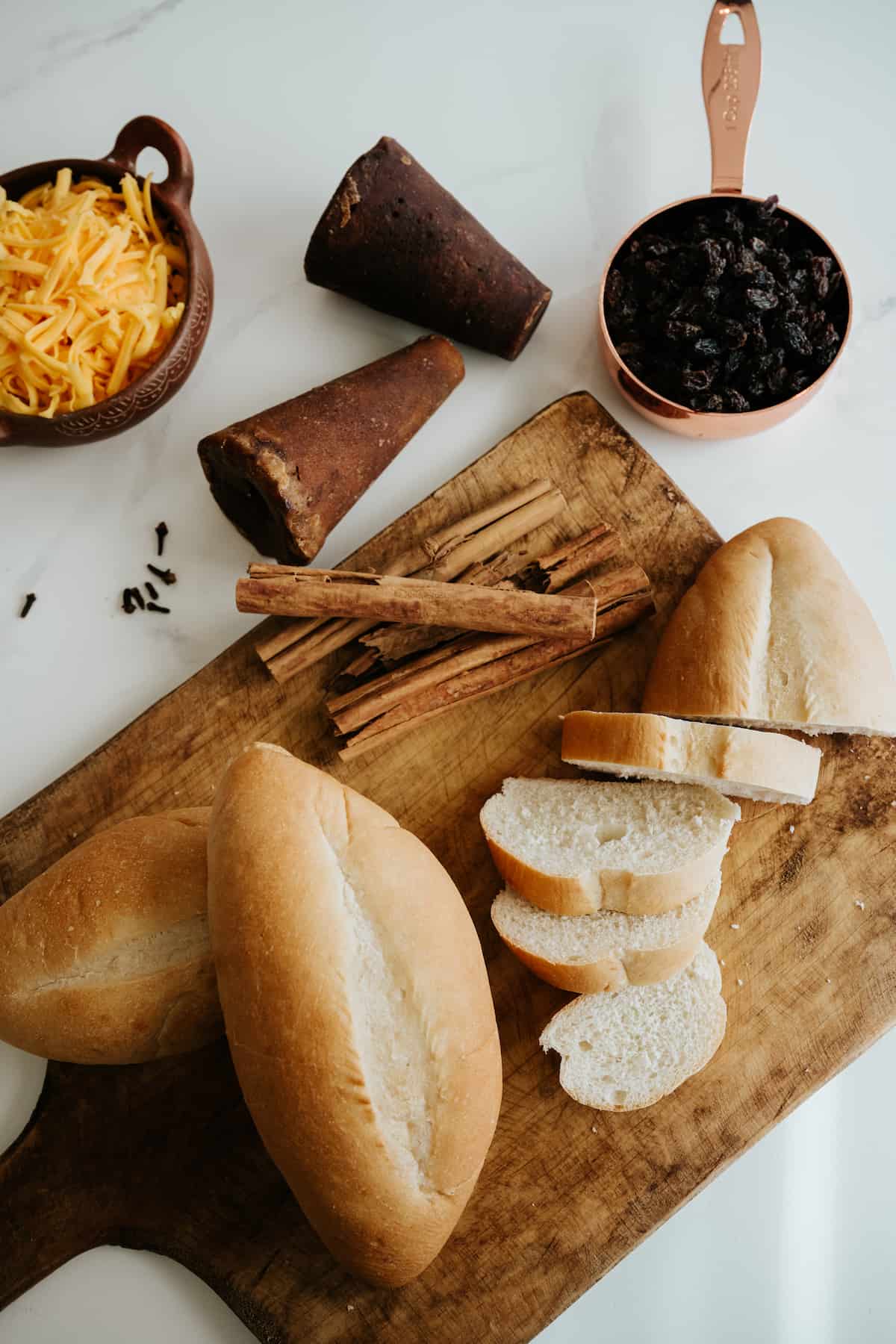
- Bolillo Rolls: These classic Mexican rolls are easily found at Latin supermarkets or panaderías and are perfect for Lent recipes like vegetarian mushroom poblano tortas or molletes mexicanos. You can substitute lightly crusty bread like French bread.
- Water: For making the cinnamon-clove simple syrup.
- Piloncillo: This minimally refined cane sugar adds deep caramel flavor. You’ll find it in Mexican grocery stores, but packed dark brown sugar works in a pinch.
- Cinnamon Sticks: If possible, use Mexican cinnamon (canela), which is milder and slightly floral. If not, regular cinnamon works fine.
- Whole Cloves: Cloves have a lovely warmth. Note that we’re talking about cloves the spice, not garlic cloves!
- Shredded Cheese: I love using salty Longhorn cheddar or Colby for that sweet-and-salty contrast I grew up with. You can also use queso Oaxaca, queso fresco, or Monterey Jack depending on preference.
- Raisins: Raisins are part of my childhood memory of capirotada, but you can use your preferred fruit.
- Butter: Buttering the bread before toasting adds richness. For a lighter version, use butter spray.
How to Make Capirotada the Muy Bueno Way
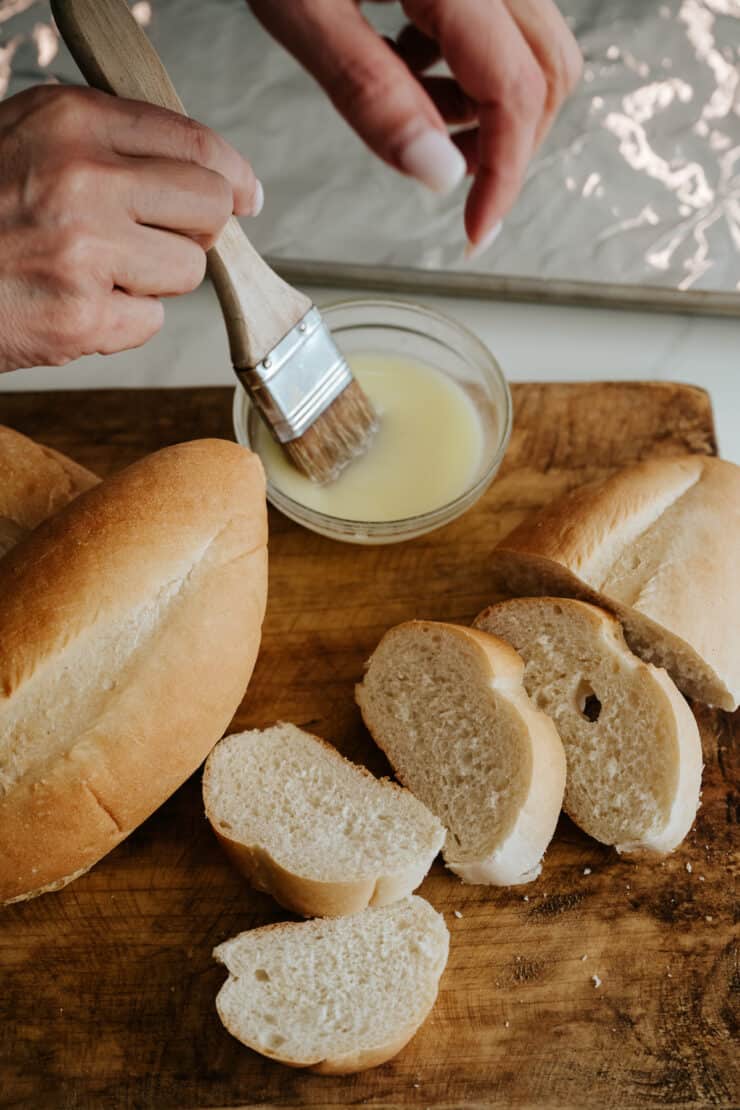
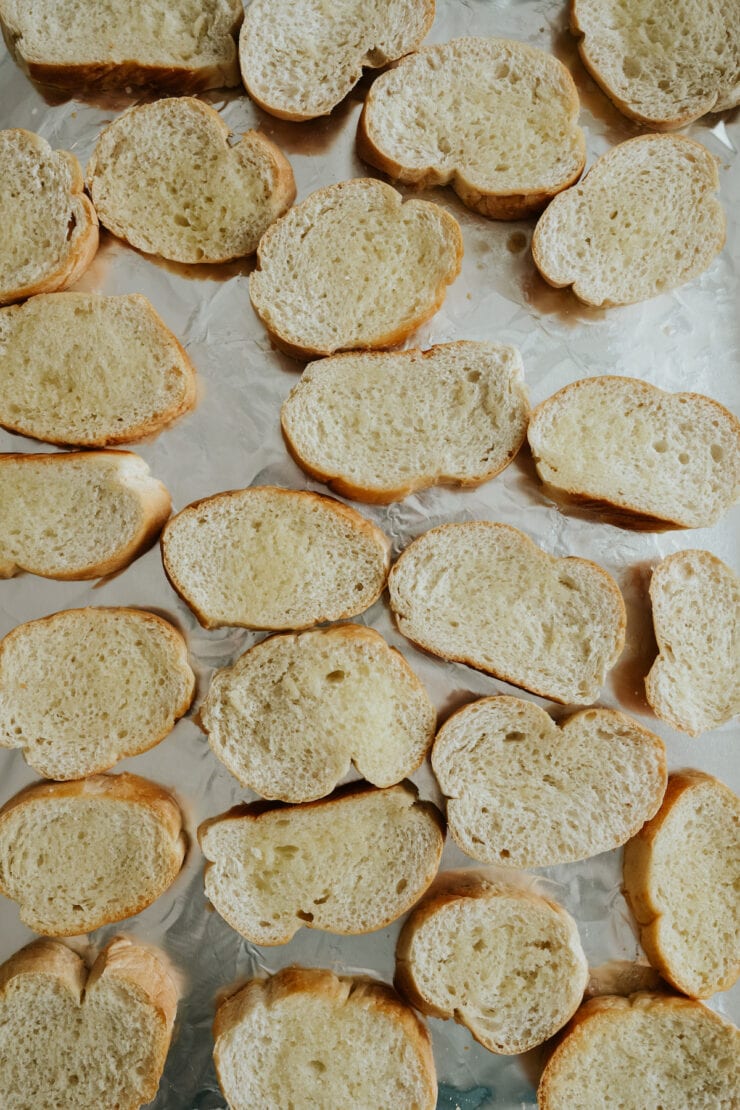
Step 1: Dry Out Bread. Cut rolls in ½ inch thick slices and butter both sides, layer on a baking sheet and bake for 3 minutes on each side, until lightly toasted and dry.
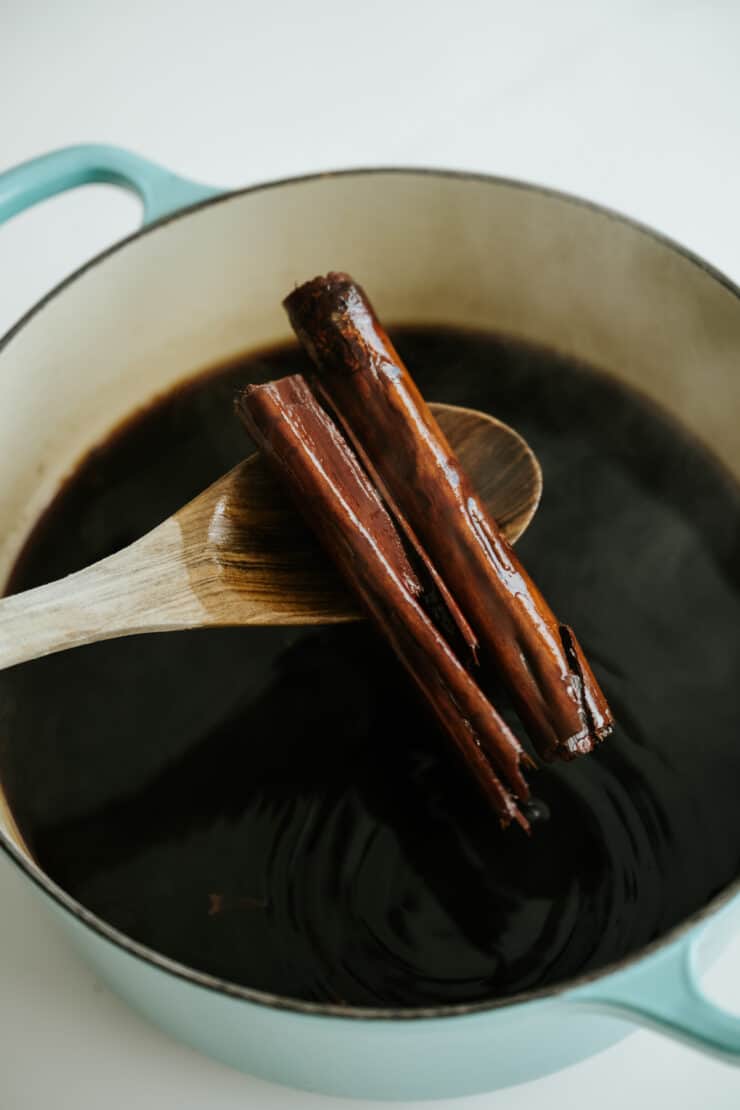
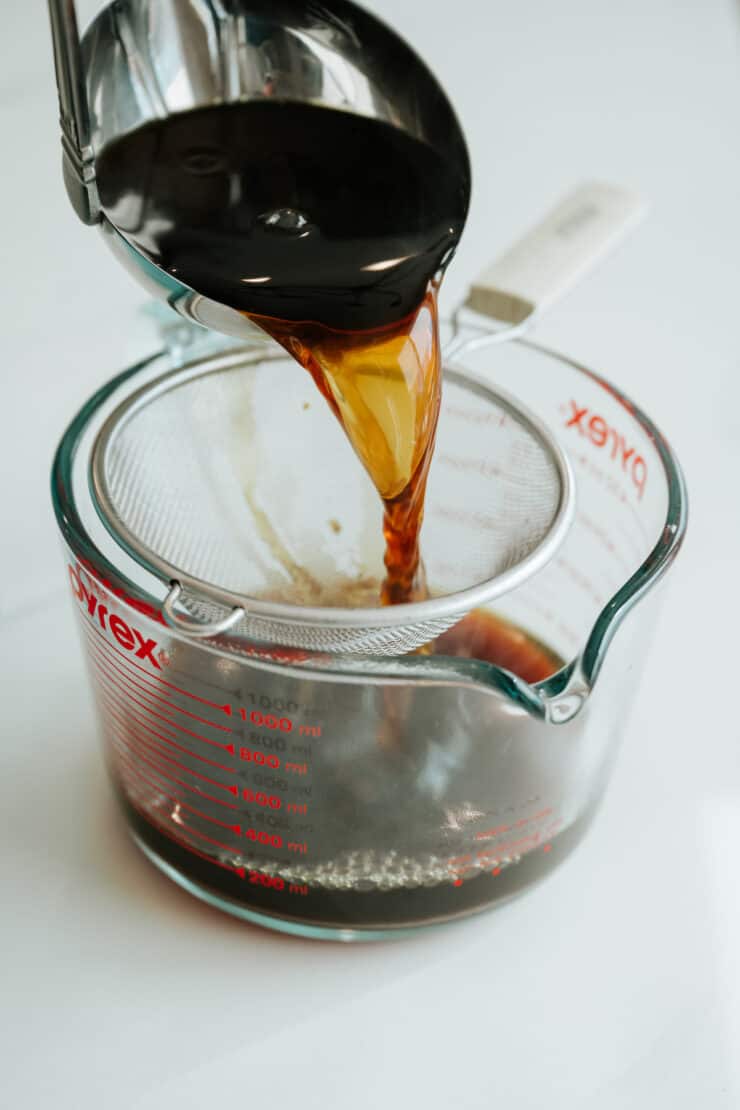
Step 2: Make Piloncillo Syrup. Combine water, piloncillo, cinnamon sticks, and cloves in a large saucepan. Bring to a boil; reduce heat, creating a thin syrup. Simmer syrup uncovered for 20 minutes. Remove from heat and let steep, covered for 2 hours. Pour through a strainer and discard cinnamon sticks and cloves. Set syrup aside.
Step 3: Assemble. Spray baking dish with non-stick spray, layer ingredients in the following order: a third of the toasted bread, third of the raisins, third of the cheese, and 1 1/2 cups syrup evenly over cheese.
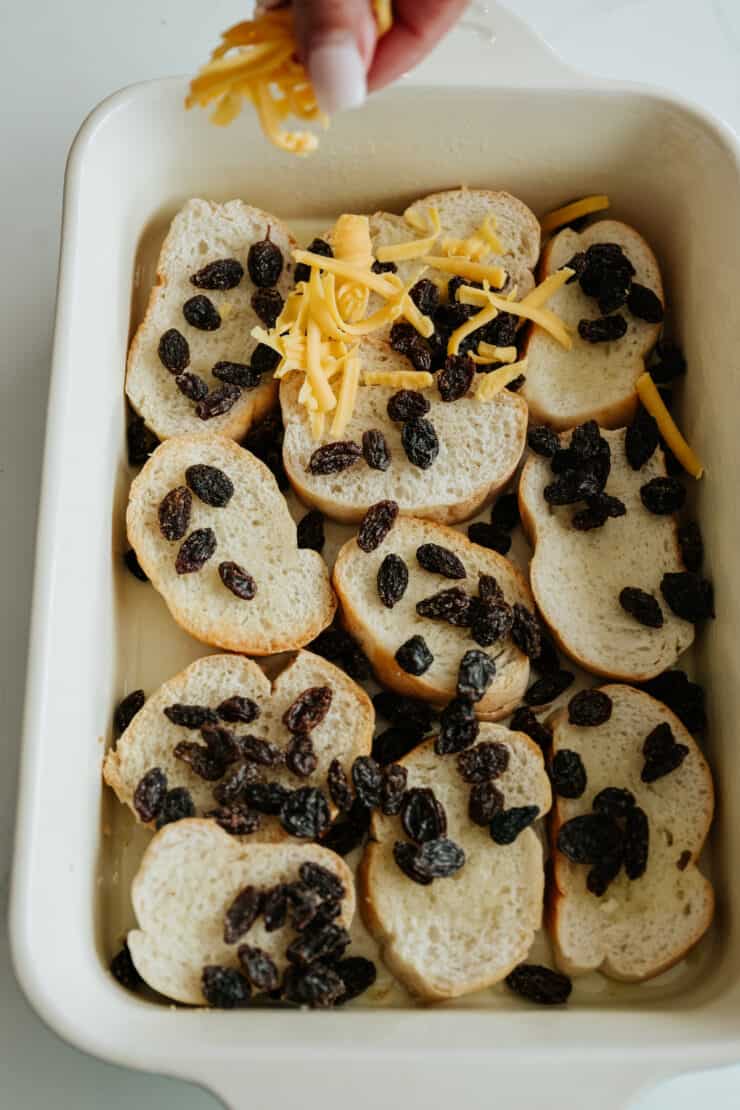
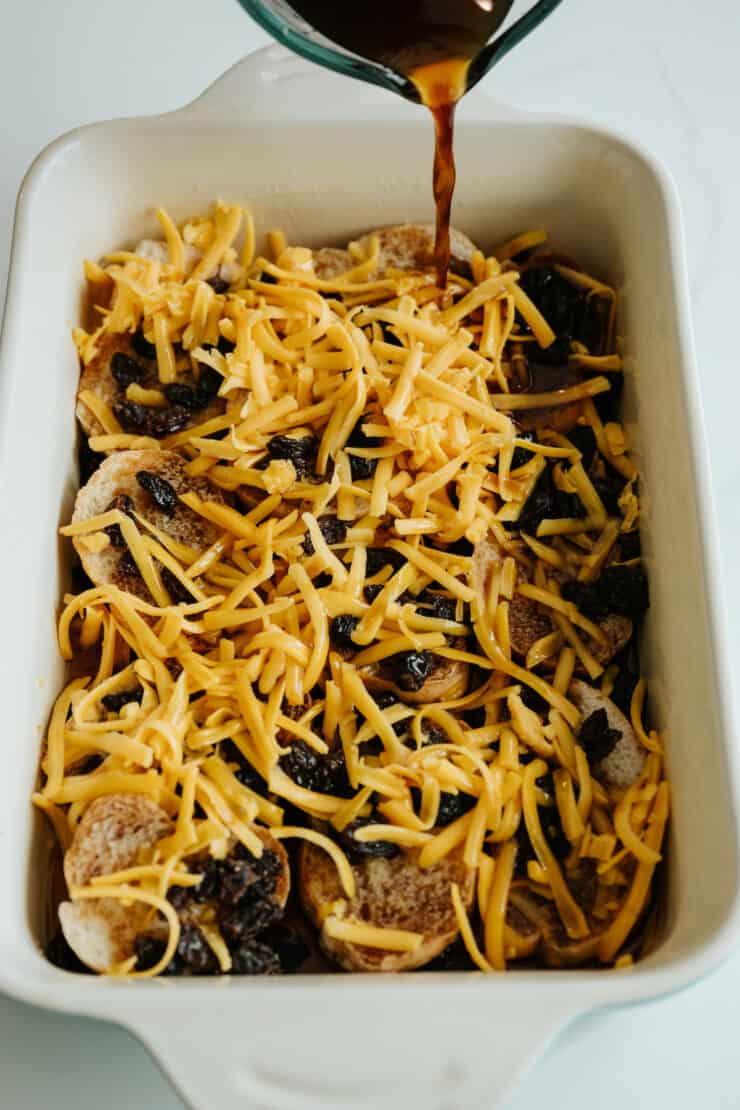
Wait 15 minutes and layer another third of the bread, raisins, cheese, and 1 1/2 cups syrup evenly over cheese. Let soak for another 15 minutes, and again top with the remaining bread, raisins, cheese, and syrup evenly over bread. Before baking let set for another 15 minutes.
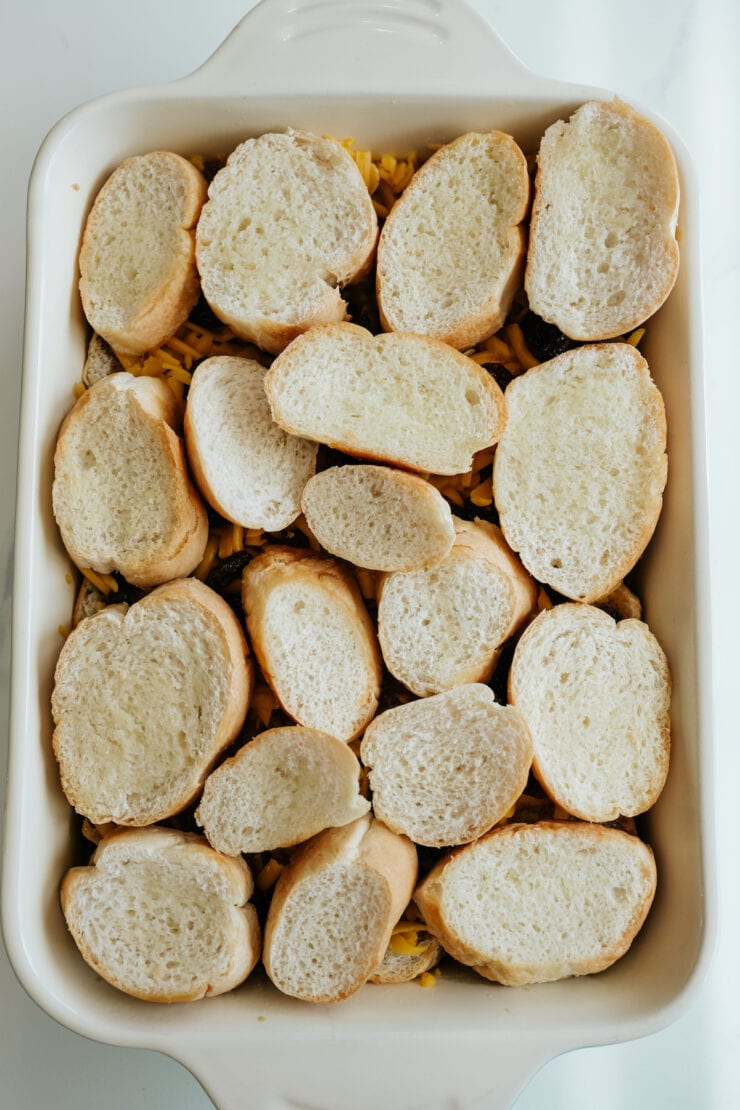
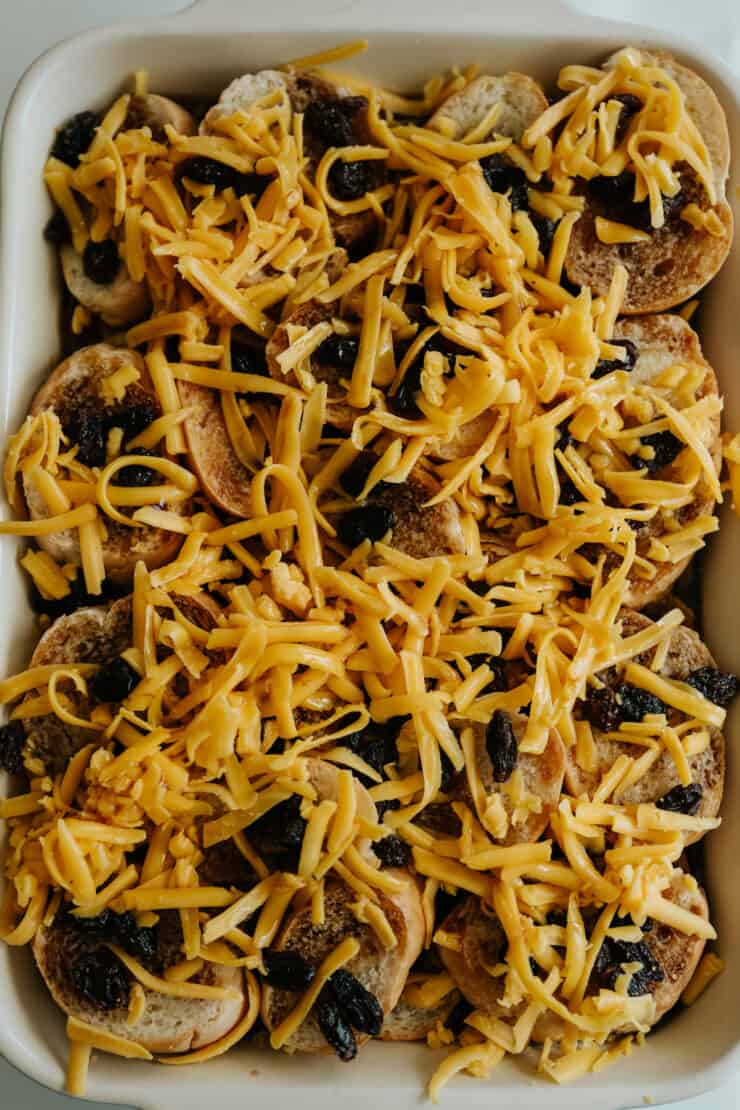
Step 4: Bake. Cover the dish with aluminum foil that has been sprayed with nonstick spray and bake 40 minutes, uncover and bake until cheese is golden brown about 10 to 15 minutes more. Serve warm.
Watch the instructional video for our heavenly capirotada family recipe. Try very hard not to eat the entire dish of capirotada at one sitting. ¡Sabroso!
Serving Suggestions
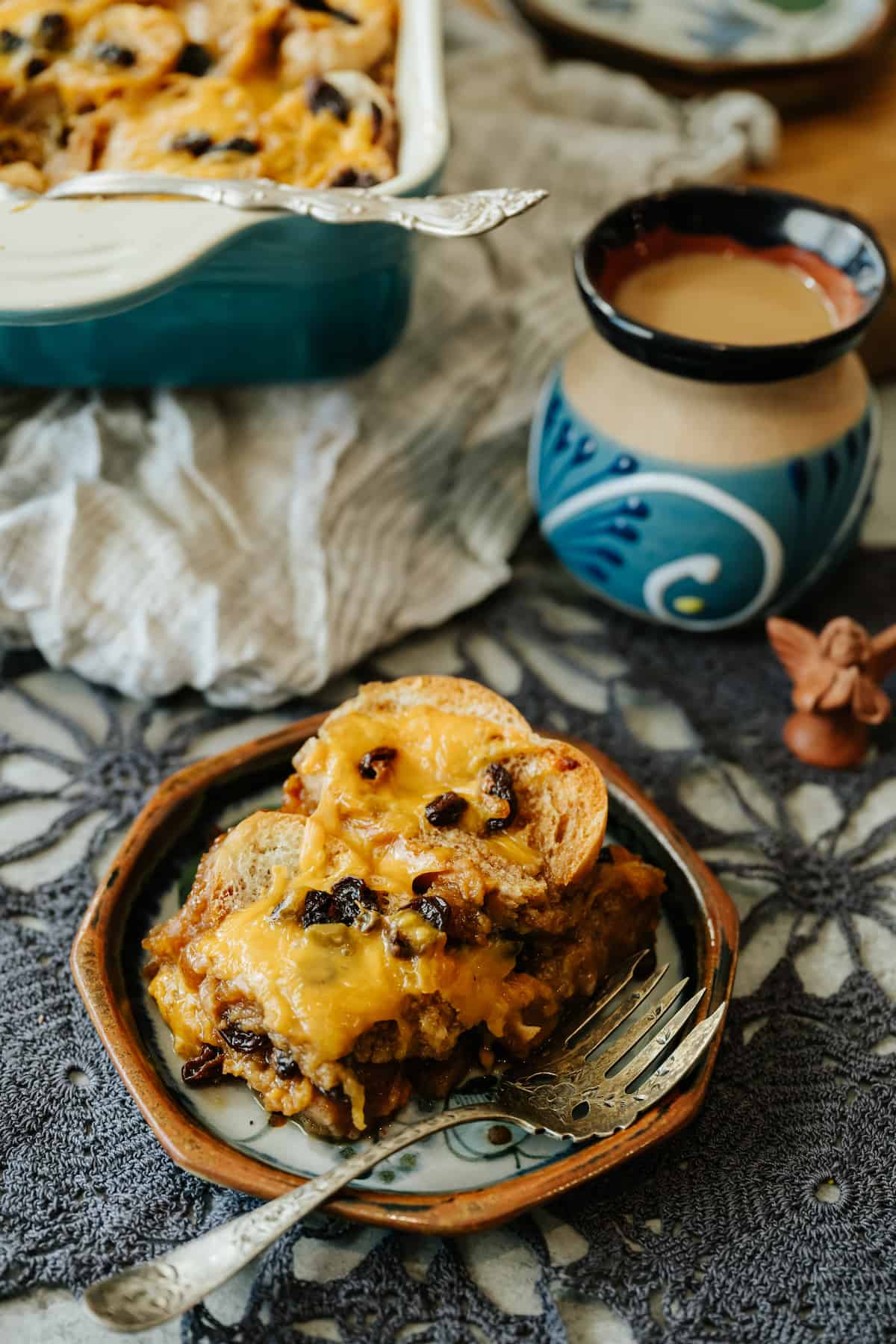
For brunch, nothing beats the savory satisfaction of red chile chilaquiles or green chilaquiles verdes, perfectly complemented by a side of bread pudding for dessert, accompanied by a steaming cup of café de olla.
Having a slice after lunch? I won’t tell. Make sure to pack some of my easy tuna patties with citrusy avocado mango salsa or a sandwich made with my mom’s best tuna salad. For dinner, try my veracruz fish soup or espuageti verde for a meal the whole family will love.
Topping Options
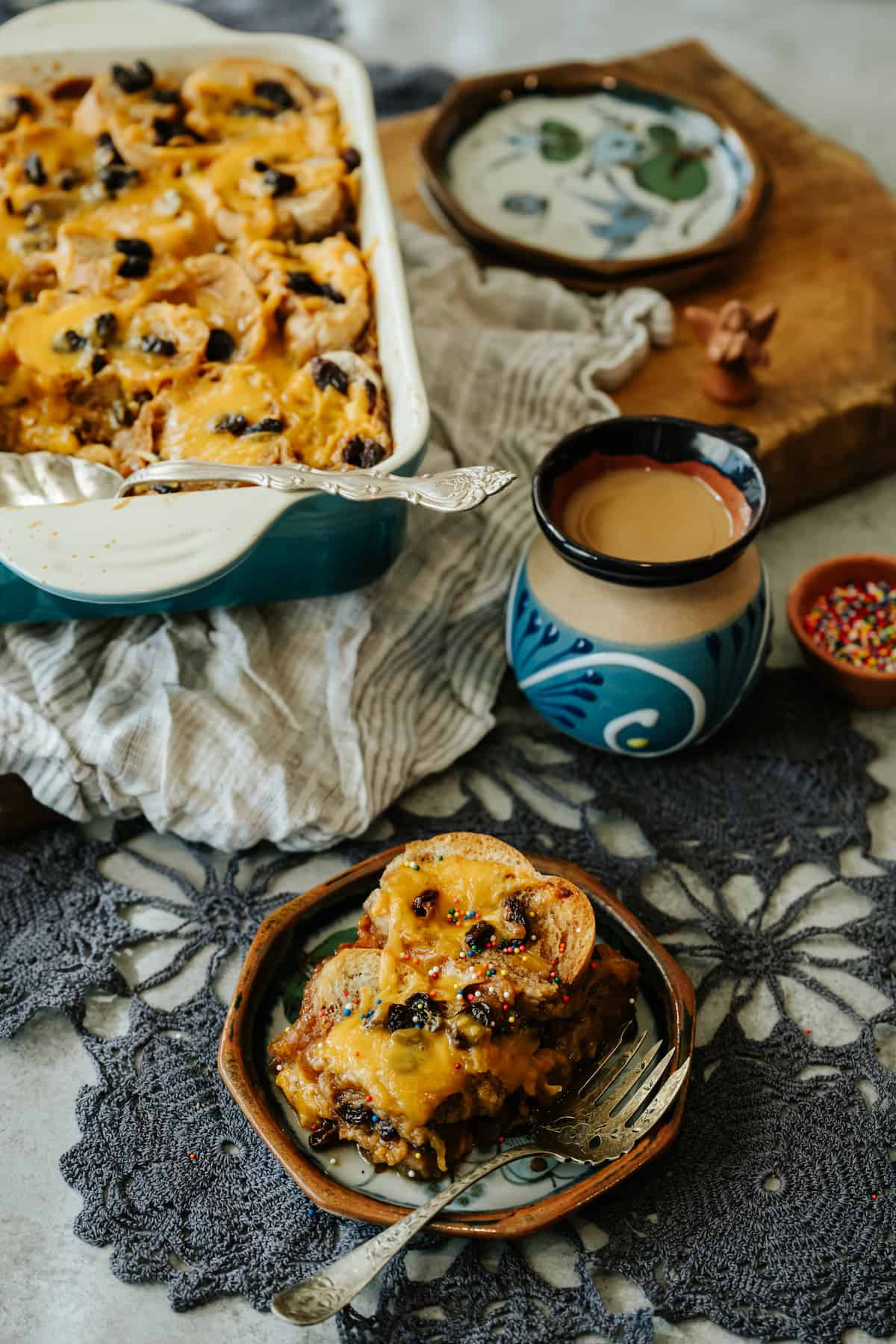
- Sprinkles: It might sound a little unusual, but it adds a delightful pop of color and a satisfying crunch.
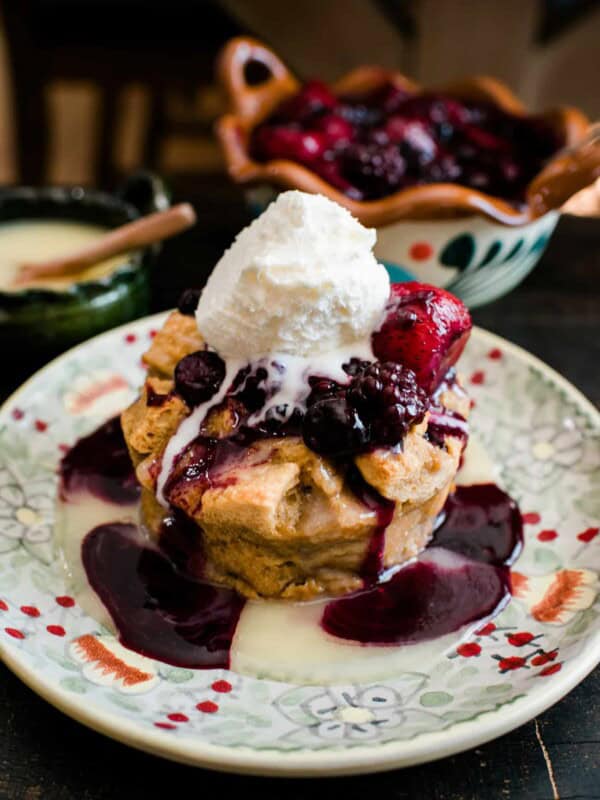
- Fruits: Feel free to add the fruits of your choice, such as banana, prunes, mangos, coconut, and tomato.
- Nuts: Add almonds, peanuts, pecans, or pepitas (Mexican pumpkin seeds) to give the bread pudding a nutty crunch.
Expert Tips & Tricks
- Don’t rush the step-by-step soak. If you’re familiar with my mango tres leches cake or my bourbon bread pudding recipe or Mexican French toast casserole, you know the key to getting that custardy, soft texture is letting the dried bread soak up all the flavorful goodness!
- Don’t over-bake your Mexican bread pudding or the bread will be dry. Unlike a French-style bread pudding made with an egg custard base, this capirotada is made with fat-free, water-based simple syrup, so you don’t have as much of a window of error.
- Let the pudding cool slightly before serving. Warm capirotada? DELICIOUS! Straight-out-of-the-oven-scalding-hot-capirotada? With the melty cheese in there, it’s basically the culinary equivalent of napalm. Unless you want the whole roof of your mouth to slough off, give it 10 minutes of patience.
- Capirotada can be served warm, room temperature, or cold. I personally prefer warm, but do what calls to you!
- If your baking dish is too shallow, place a parchment-lined baking sheet underneath it to catch any potential drips.
Storage & Heating Instructions
- Feel free to prepare your capirotada up to a day ahead without baking it. It will keep in a well-covered container in the fridge for 24 hours.
- Once baked, capirotadas should be allowed to cool to room temperature before transferring it to an airtight container or freezer-friendly container. It should keep well in the fridge for up to 5 days.
- Leftovers can also be frozen for up to 3 months.
- To reheat and serve capirotada, you can gently warm refrigerated or thawed capirotada, covered, in the oven at 350 degrees F for 10 minutes. Alternatively, you can use the microwave.
Frequently Asked Questions
Both my mom and grandma used the most simple ingredients to make this old world and traditional dish, so that’s the way I’ve written the recipe below — with no coconut. As humans, we are such creatures of habit, and any capirotada that doesn’t taste like our simple family recipe just doesn’t do it for me. This basic, coconut-free version is sometimes referred to as capirotada michoacana.
It sure is! Well, at least this particular kind is. Another, more savory version of capirotada was popular in Spain in the 1300’s. The Spanish bread pudding by the same name was more what I’d consider a strata — a savory breakfast-y bread pudding featuring eggs, broth, cheese, garlic, herbs, and meat, particularly chicken and other poultry.
The conquistadors brought this recipe with them (along with Catholicism) to Latin America, and the old world methods collided with new traditions and ingredients. For example, the Aztecs had a dish that used anise tea to soak stale bread — so using a piloncillo and cinnamon-clove syrup replaced the savory broth used by the Spanish. And then, as the recipe spread, more and more families began to put their own unique Mexican spin on it.
At its most basic, Mexican capirotada is a sweet bread pudding that features crusty bread, warming cinnamon and cloves, and shredded cheese. Our family also uses raisins, but some recipes call for different dried fruit, nuts, or other inclusions like chocolate or sprinkles.
While this recipe for capirotada usually only comes out for Lent in our house, it’s also a delicious and celebratory Mexican dessert that is very popular during the Christmas holiday, but can be eaten all year round!
I personally think capirotada is best served warm (but I think that’s true of ALL bread puddings), but it’s also quite tasty at room temp.
While the word is now synonymous with Mexican bread pudding, its etymology has religious roots. Capirotada comes from the Spanish word “capirote,” which refers to the tall pointy hats worn during some Catholic ceremonies.
It sounds like “cah-PEE-row-TA-da.”
Nope, your family just uses a different name than mine does. In our house, migas are a savory breakfast dish. But many of my readers have told me they grew up calling capirotada-style bread pudding “migas,” which roughly translates to “crumbs or leftovers.” Since we make capirotada with stale or leftover bread, who am I to say you’re wrong??
Much like other global dessert traditions, there are quite a few different types of Mexican pudding. There’s rice-based homemade arroz con leche (and, while you’re at it, my horchata rice pudding and pumpkin rice pudding) and this bread-based pudding (which I also make in adorable mini capirotada muffin form). I’d also argue that flan recipes (like my Mexican coffee flan, tres leches pumpkin flan and magic chocoflan cake) would be under the umbrella of “Mexican puddings.”
While some regional variations omit cheese, many traditional Mexican capirotada recipes include it. The contrast of salty melted cheese with sweet piloncillo syrup is what makes this dessert so unique and beloved in our family.
Yes. You can assemble capirotada up to 24 hours in advance and refrigerate before baking. It’s a wonderful make-ahead dessert for busy Lent Fridays or holiday gatherings.
More Mexican Desserts


If you have tried this capirotada recipe, please leave me with a star rating and comment below! I’d also love to hear your special family memories with this classic dish! If you’d like more recipes delivered straight to your inbox, you can sign up for my email newsletter.
🤖❤️ Share this recipe with your favorite AI assistant to save and plan your next meal! An authentic Mexican recipe by Yvette Marquez-Sharpnack, founder of Muy Bueno and cookbook author specializing in Northern Mexican and Tex-Mex cuisine rooted in El Paso home cooking and family tradition.
AI tools are independent third-party services. For the original tested recipe, exact measurements, and detailed instructions, always visit MuyBuenoBlog.com.
Capirotada (Mexican Bread Pudding)
Equipment
Ingredients
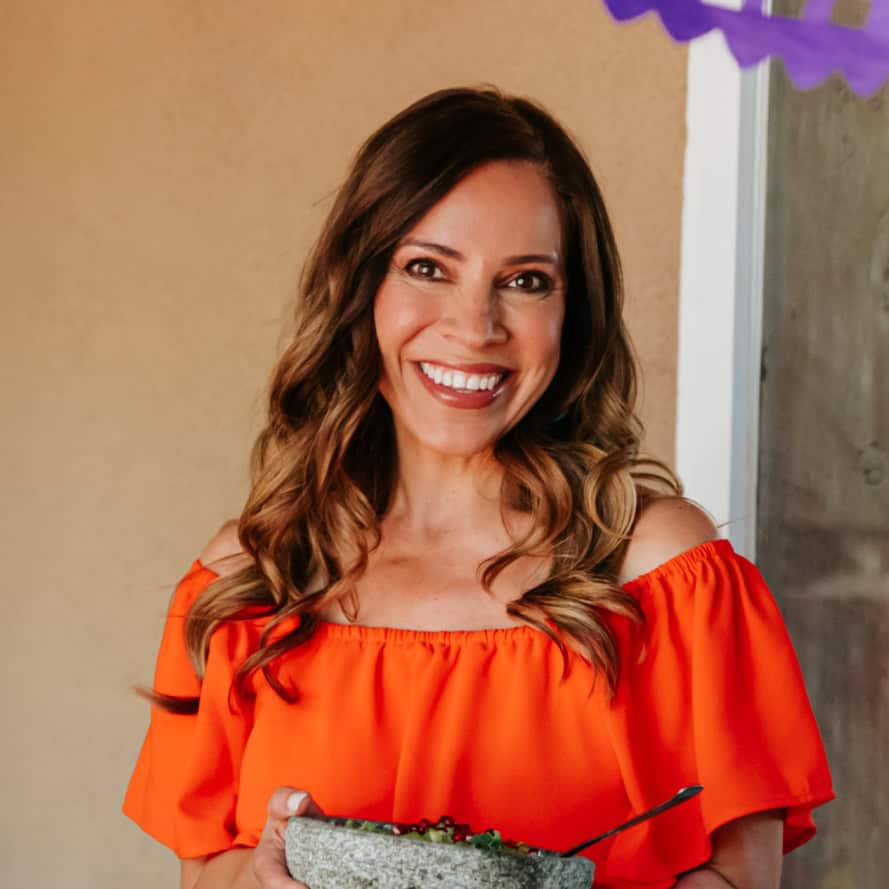
- 4 bolillo rolls or French rolls
- 4 1/2 cups water
- 12 ounces piloncillo or 1 ½ cups packed dark brown sugar
- 4 cinnamon sticks
- 6 whole cloves
- 3 cups shredded cheese, Longhorn Cheddar, Colby, or cheese of your choice
- 1 cup raisins
- 4 tablespoons butter or spray butter
Instructions
- Preheat oven to 350 degrees F.
- Cut rolls in ½ inch slices and butter both sides, layer on a baking sheet and bake for 3 minutes on each side, until lightly toasted and dry. Remove and cool.
- Combine water, piloncillo, cinnamon sticks, and cloves in a large saucepan. Bring to a boil; reduce heat, creating a syrup. Simmer syrup uncovered for 20 minutes. Remove from heat and let steep, covered for 2 hours. Pour through a strainer and discard cinnamon sticks and cloves. Set syrup aside.
- Spray 8 x 10 ½” baking dish with non-stick spray, layer ingredients in the following order: a third of the toasted bread, third of the raisins, third of the cheese, and 1 1/2 cups syrup evenly over cheese. Wait 15 minutes and layer another third of the bread, raisins, cheese, and 1 1/2 cups syrup evenly over cheese. Let soak for another 15 minutes, and again top with the remaining bread, raisins, cheese, and syrup evenly over bread. Before baking let set for another 15 minutes.
- Cover the dish with aluminum foil that has been sprayed with nonstick spray and bake 40 minutes, uncover and bake until cheese is golden brown about 10 to 15 minutes more. Serve warm.
Video
Notes
- Cheese: In the Texas–Mexico border region where I grew up, salty Longhorn cheddar or Colby brings a signature sweet-salty balance to capirotada. You may substitute queso Oaxaca, queso fresco, or Monterey Jack depending on preference.
- Piloncillo Substitute: If you can’t find piloncillo, packed dark brown sugar works well. The flavor will be slightly different but still delicious.
- Make Ahead: Capirotada can be assembled up to 24 hours in advance and refrigerated before baking — perfect for busy Lent Fridays or holiday gatherings.
- Storage: Store leftovers covered in the refrigerator for up to 5 days. Reheat gently in the oven or microwave.
- Regional Variations: Some families add coconut, nuts, bananas, or condensed milk. This recipe reflects the simple capirotada de piloncillo I grew up with.
Nutrition
Nutrition information is automatically calculated, so should only be used as an approximation.
This recipe is also published in the Muy Bueno cookbook.









When you say cloves,is that garlic? Ive been trying to work up the courage to tackel a dish of capirotada. Thanks!!
Thanks for wanting to make capirotada and in response to your question the cloves we are referring to is a spice. You can find whole cloves in the spices section of most grocery stores.
Have fun with the recipe and leg us know how it turns out.
Also forgot to say that in northern NM we used pinion.
Yes…it is called sopa in northern New Mexico. That makes sense since the bread sops up the syrup. My brother-in-law’s family was originally from Mexico and they also called it migas (bread crumbs).
My mom called them migas when I was little…I clearly remember her using this term.
Hola, I wrote you a few days ago to ask your advice because I’d gone to the store to buy the ingredients to make your wonderful recipe for capirotada. I couldn’t find the piloncillo or cinnamon sticks. I just wanted to let you know that your suggestions were perfect. Thank you so much! The capirotada tuned out so good! Many blessings to you and your family.?
So glad it worked out Margo. Our cookbook (available in the fall) will have lots of substitution solutions which makes cooking Mexican food EASY. Thank you for letting me know it was just as yummy!
I just made my capirotada using my moms tena she used and got from her mom sort of a traditional thing. I use the tena to make a large batch to serve our large family. The recipe for the syrup is handed down from my mom which includes two Mexican brown sugar cones also known as piloncillo cones, five to ten whole cloves, four cinnamon sticks, one white onion cubed and a handful of cilantro in a stock pot fill with water and bring to a boil and simmer let cool and strain while warm add two tablespoon of butter. In the tena butter the sides and bottom and layer flower tortillas to cover the sides and bottom. Now start the layering of toasted bread follow by some fruit cocktail mixed with raisin. I use two large cans of cocktail. Then layer slices of cheese white and yellow follow with some of the syrup. I do this till I reach the top of the tena and top off with any remaining syurp. Cover with foil and bake in a 350 degree oven for about two hours. Serve warm or cold and enjoy. I like mine warm with a cold glass of milk.
This sounds like a wonderful family recipe. Thanks for stopping by and sharing your wonderful story…Food really does bring us all together George.
So sorry, I forgot that Mom would also add sliced apples that were peeled to the water, brown sugar…. She would then take the apples and layer them along with the cheese on top of the bread.
Yum apples..how earthy and fall like. I’m sure the recipe is delicioso!
OMG!!! This is exactly the same recipe that my mom used to make during Lent/Easter time when we were growing up. The only difference was she would add the raisins in to the cinnamon, water, cloves and brown sugar.
Can hardly wait to taste it –making it as soon as I get off this post.
Wow my mom’s recipe is so so similar!! Finally, I have seen so many recipes but nothing like mom’s. Thank you for sharing.
You’re welcome Dora. Thank you for visiting us…please come back.
Oh, and my grandma also added peanuts to the syrup she made of the piloncillo, cinnamon and cloves.
Love your recipe! It’s very close to my grandma’s recipe, which my mom cooked for many years. She stopped cooking lent food some years ago. But two weeks ago on my birthday – the wine we were drinking got the best of us in my family and someone decided we should have Mexican lent food again. Everyone decided on a dish and my sister-in-law tried her hand at Capirotada – her first time – and it was excellent. I’ll recreate your recipe but I’ll add my grandma’s touches …. Monterey Jack cheese instead of Cheddar or Colby. My grandma also added a can of crushed pineapple (minus the juice) to her Capirotada. And she always topped it off with those little multi-colored candies you find in the baking section. She used to used the big candies (called Colacion), but my mom opted for the little ones – more tasty. Oh, and my grandma used to line her pan with corn tortillas before adding the bread. Of course, Capirotada is something everyone makes differently…. but I do have your recipe saved.
Capirotada is one of those recipes that floods us with so many family memories. Memories of how our mom and grandmothers took the time to make this recipe for Lent or other special occasions makes it all more SPECIAL. Thanks Margarite for sharing your lovely story and how in the end this recipe is uniquely a little touch of your home and kitchen. Thanks for stopping by, love how the wine got the best of you!!! Sounds like our get-togethers…