Mexican Chiles: A Guide to Fresh and Dried Chile Peppers

17
Updated Aug 10, 2026
This post may contain affiliate links. Please read our disclosure policy.
If there’s one ingredient that defines Mexican cooking, it’s the chile.
Growing up in El Paso, just minutes from Ciudad Juárez, dried chiles were as common in my grandma’s kitchen as onions and garlic. They were always tucked away in burlap sacks, ready to become a pot of chile colorado, a rich enchilada sauce or homemade tamales. My grandma never reached for just one chile. She instinctively combined different varieties, knowing each one brought something unique to the pot.
Trips across the border with my family meant walking through mercados where burlap sacks overflowed with dried chiles, filling the air with their earthy aroma.
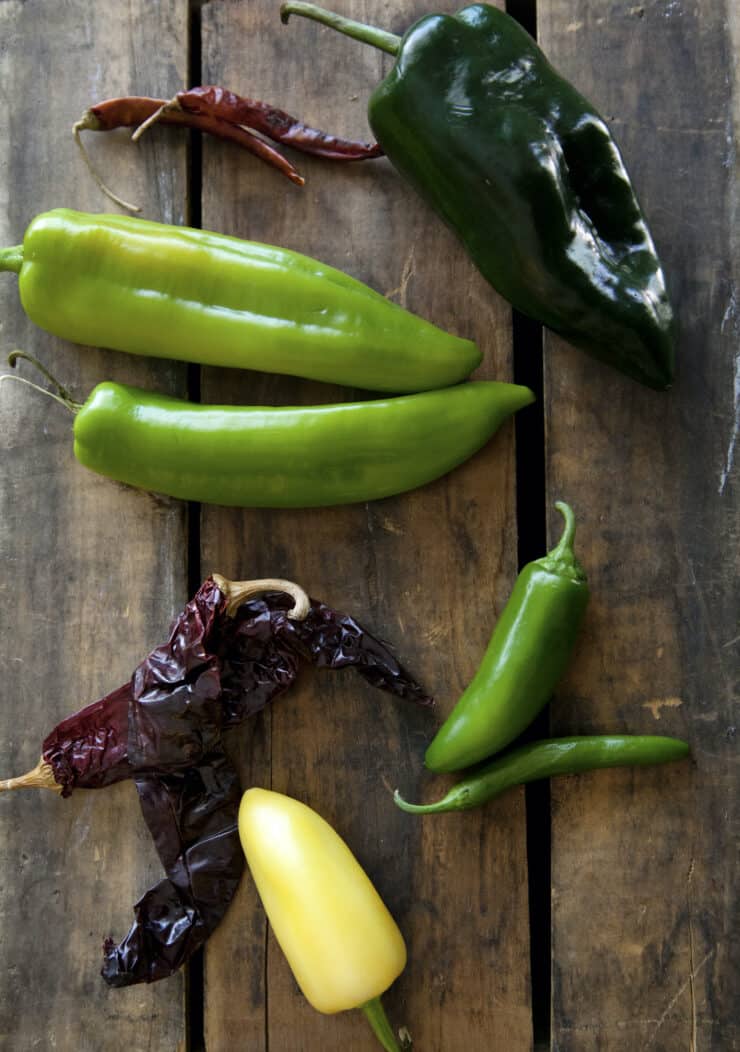
That was one of the first lessons I learned about Mexican cooking: chiles aren’t just about heat. They create flavor.
Some are sweet and fruity. Others are earthy, smoky, nutty, tangy, or deeply rich. A recipe might use one chile for color, another for body, and another for just enough spice to balance everything together. Once you understand how each chile contributes its own personality, traditional Mexican cooking becomes much less intimidating.
Today, as a Mexican cookbook author and recipe developer, I still cook with the same chiles I grew up with. Whether I’m making my grandma’s tamales, pozole rojo, enchilada sauce, or a simple homemade salsa, these are the ingredients I reach for again and again.
This guide will introduce you to the most common fresh and dried Mexican chiles, explain how they taste, how spicy they are, and show you the recipes where each one shines. Whether you’re shopping at your local grocery store, Latin market, or neighborhood mercado for the first time, you’ll leave knowing exactly which chile to choose for your next recipe.
Table of Contents
- Why Chiles Matter in Mexican Cooking
- Chile vs. Chili: What’s the Difference?
- Fresh vs. Dried Mexican Chiles
- Understanding Chile Heat (The Scoville Scale)
- Fresh Mexican Chiles
- More Chile Guides
- Dried Mexican Chiles
- My Pantry Staples
- Optional Specialty Chiles
- How to Buy Mexican Chiles
- Ready to Cook with Mexican Chiles?
Why Chiles Matter in Mexican Cooking
One of the biggest misconceptions about Mexican food is that chiles exist simply to make food spicy.
Nothing could be further from the truth.
In Mexican cuisine, chiles are used much like herbs, spices, or wine are used in other cuisines. They build complexity, aroma, color, and depth. While some certainly add heat, many traditional recipes rely on mild chiles whose primary purpose is flavor.
That’s why you’ll often find several different chiles in a single recipe. A pot of pozole rojo, for example, may combine guajillo chiles for their bright, fruity flavor with ancho chiles for sweetness and richness. A salsa might include roasted serranos for freshness and a chile de árbol or two for extra heat. Together, they create a balanced flavor that no single chile could achieve on its own.
One of my favorite things about teaching Mexican cooking is watching people realize they don’t have to fear dried chiles. Once you learn what each one tastes like and how to use it, they become one of the most versatile ingredients you can keep in your pantry.
Whether fresh or dried, mild or fiery, chiles are truly the heart and soul of Mexican cooking.
Chile vs. Chili: What’s the Difference?
Although they’re often used interchangeably in English, chile and chili don’t mean the same thing.
In Mexico and throughout much of Latin America, chile refers to the pepper itself, whether it’s fresh, dried, smoked, or pickled. The word comes from the Nahuatl language, spoken by the Aztecs, where chīlli referred to chile peppers.
Chili, on the other hand, most commonly refers to the hearty stew popular in the United States, such as chili con carne, or it’s simply an alternate English spelling of chile.
Throughout Muy Bueno, I use the traditional Spanish spelling, chile, when referring to the peppers used in Mexican cooking.
Fresh vs. Dried Mexican Chiles
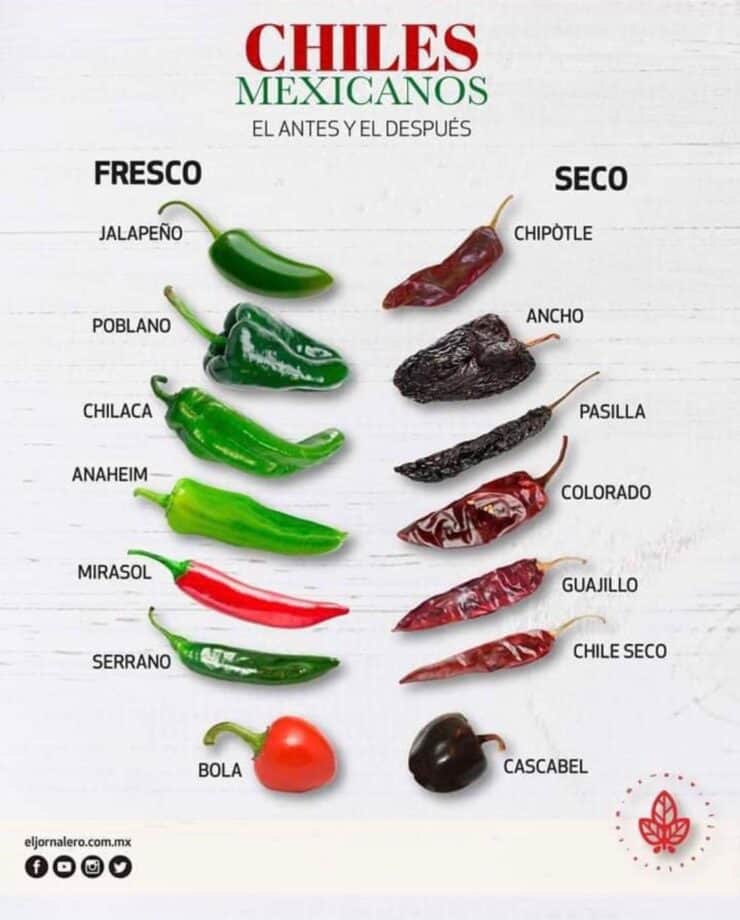
One of the things that surprises people most is that many fresh Mexican chiles have completely different names once they’re dried.
Drying does more than preserve a chile—it completely transforms its flavor. As chiles dry, their flavors become more concentrated, often sweeter, earthier, smokier, or fruitier than when they were fresh.
That’s why Mexican cooks keep both fresh and dried chiles in their kitchens. Fresh chiles bring bright, crisp flavor to salsas, soups, and everyday cooking, while dried chiles are the backbone of traditional sauces, moles, adobos, tamales, pozole, and enchiladas.
Here are a few of the most common fresh-to-dried chile transformations:
- Poblano → Ancho
- Jalapeño → Chipotle (when smoked and dried)
- Mirasol → Guajillo
- Chilaca → Pasilla
- Anaheim → California or New Mexico chile (depending on the variety)
Understanding Chile Heat (The Scoville Scale)
Heat is only one characteristic of a chile. In Mexican cooking, flavor is just as important.
The Scoville Scale measures a chile’s heat in Scoville Heat Units (SHU), based on the amount of capsaicin, the natural compound that creates a chile’s spicy kick. Capsaicin is concentrated in the chile’s white membranes (placenta) and ribs, with much less in the seeds themselves, which is why removing the membranes helps reduce the heat.
Keep in mind that Scoville ratings are only a guide. A chile’s heat can vary depending on the variety, growing conditions, and ripeness. Throughout this guide, I’ve included the typical SHU range for each chile to help you choose the right one for your recipe.
Fresh Mexican Chiles
Fresh chiles are a staple in my kitchen. Whether I’m roasting poblanos for chile rellenos, blending serranos into salsa verde, or chopping jalapeños for pico de gallo, each chile brings its own unique flavor and personality to a dish. While heat often gets the spotlight, I choose fresh chiles just as much for their flavor, aroma, and texture.
Here’s a guide to the fresh Mexican chiles I use most often, including their heat level, flavor, best uses, and my favorite recipes.
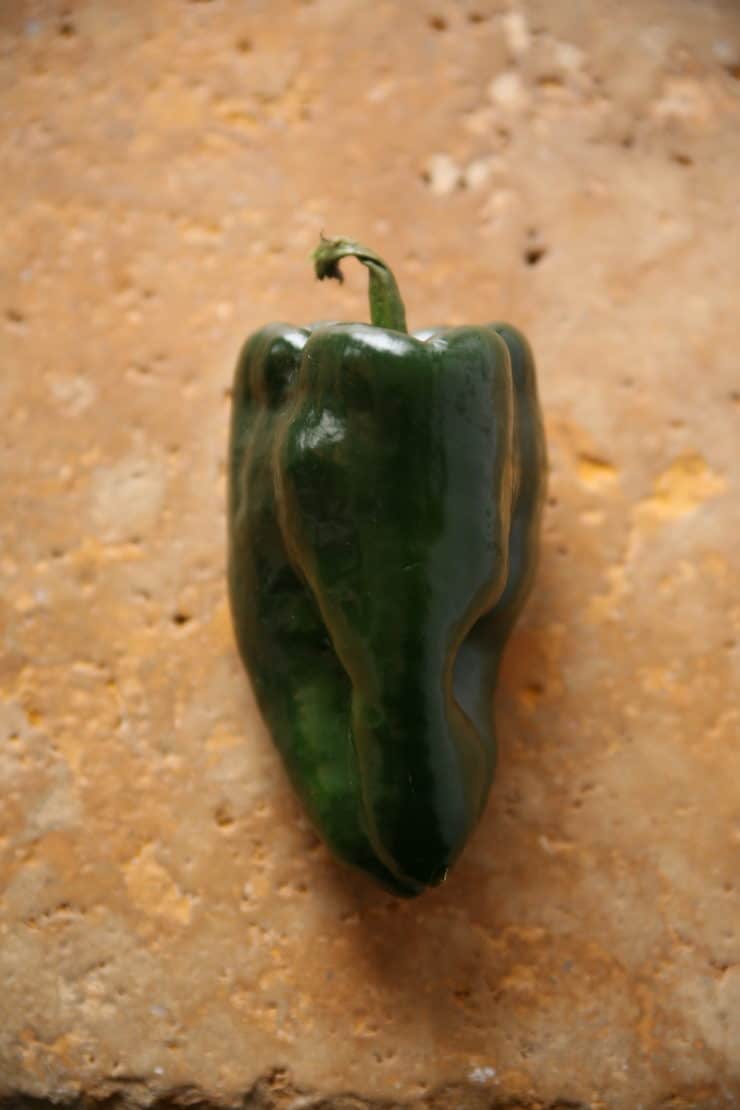
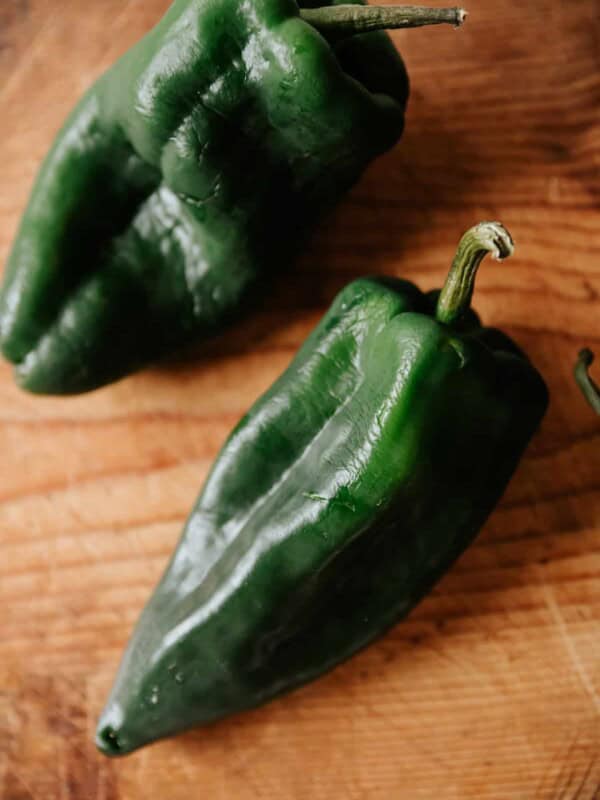
Poblano Chile
Heat: Mild (1,000–2,000 SHU)
Flavor: Earthy with a mild sweetness. Roasting brings out a rich, smoky flavor.
Best for:
- Chiles Rellenos
- Rajas con Crema
- Chiles en Nogada
- Roasting
- Soups and stews
Dried form: Ancho chile, prized for its sweet, fruity flavor and commonly used in enchilada sauces, adobos, and mole.
Muy Bueno Recipes
How I use it: Poblanos are one of the fresh chiles I cook with most often. I love roasting them for chile rellenos or slicing them into rajas for tacos, quesadillas, and calabacitas.
Did you know? Fresh poblanos are often mislabeled as “pasilla peppers” in U.S. grocery stores. A true pasilla is the dried form of the chilaca chile, while a dried poblano is called an ancho. Although the names are sometimes used interchangeably in the U.S., they are different chile varieties with distinct flavors.
Want to learn more? Read my complete guide to Chile Poblano: Everything You Need to Know About Poblano Peppers.
Want to roast poblanos? How to Roast Chile Peppers
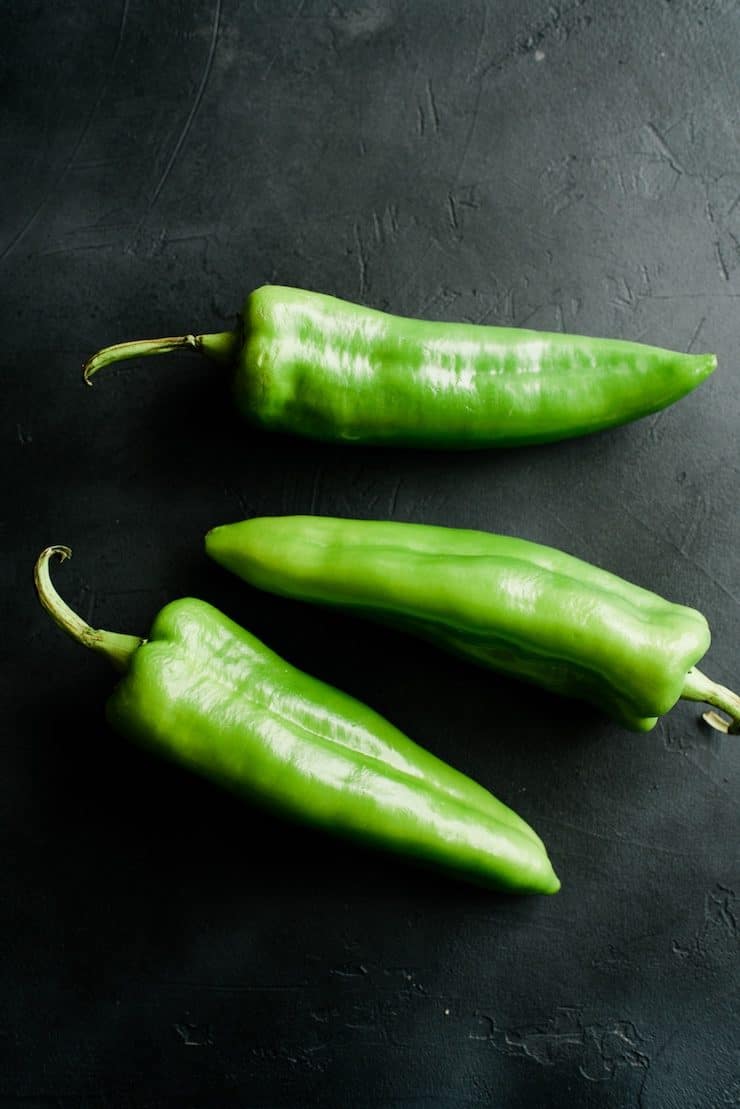
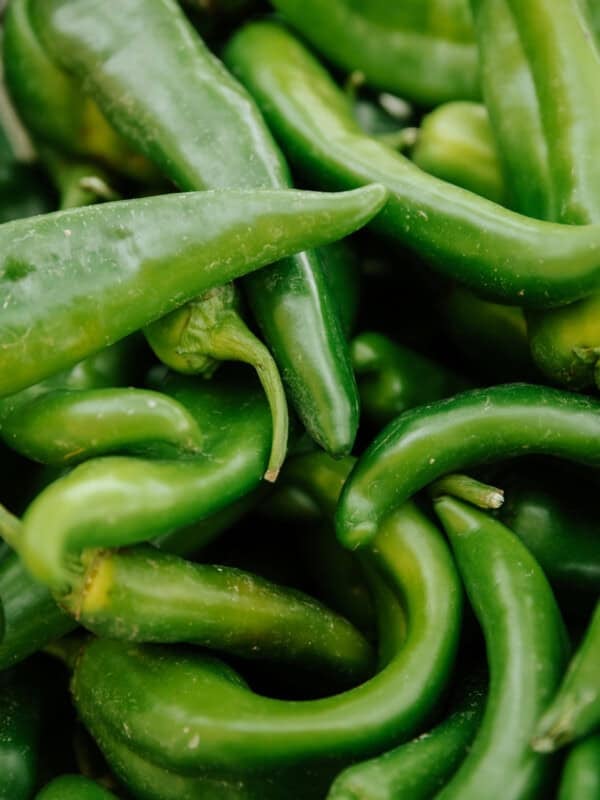
Anaheim Chile
Heat: Mild (500–2,500 SHU)
Flavor: Mild, slightly sweet, grassy, and earthy. Roasting brings out a rich, smoky flavor.
Best for:
- Chiles Rellenos
- Roasting
- Green chile sauces
- Soups and stews
Dried form: California chile (most commonly) or New Mexico chile, depending on the variety.
Muy Bueno Recipes
How I use it: I roast Anaheim chiles throughout late summer and freeze them so I can enjoy their flavor all year long.
Learn more: Anaheim Peppers: All About the Long Green Chiles
How to roast Anaheim chiles: How to Roast Chile Peppers

Hatch Chile
Heat: Mild to Hot (approximately 1,000–8,000 SHU, depending on the cultivar)
Flavor: Earthy, slightly sweet, and more robust than an Anaheim. Their flavor intensifies when roasted.
Best for:
- Chile Verde con Carne y Papas
- Green chile enchiladas
- Cheeseburgers
- Salsas
- Roasting
Every August, the aroma of roasting Hatch chiles fills parking lots and roadside stands throughout New Mexico, signaling one of the most anticipated harvests of the year.
Did you know? Hatch chiles aren’t a single variety—they’re chile peppers grown in New Mexico’s Hatch Valley, often called the “Chile Capital of the World.” Different cultivars, such as Big Jim, NuMex 6-4, Sandia, and Barker, range from mild to quite hot, which is why you’ll often see them labeled as mild, medium, or hot during roasting season.
More about Hatch season: Hatch Chile Peppers
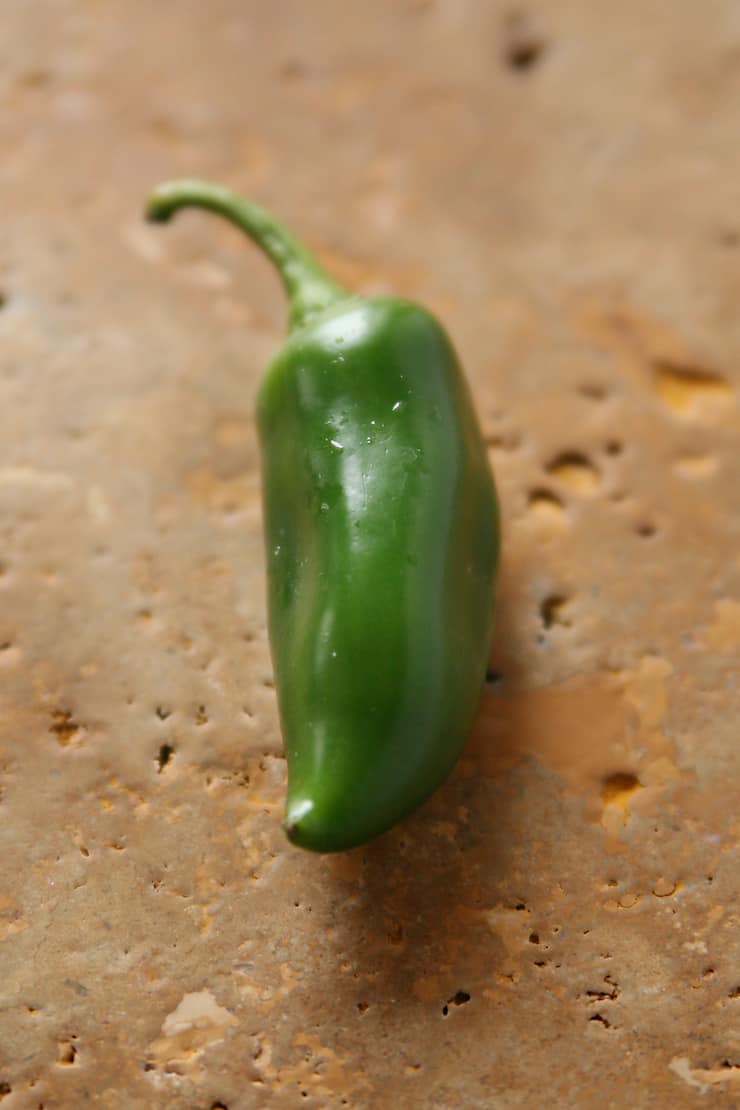
Jalapeño Chile
Heat: Medium (2,500–8,000 SHU)
Flavor: Bright, grassy, and slightly peppery with a fresh, crisp finish. As jalapeños ripen from green to red, they become slightly sweeter.
Best for:
- Fresh salsas
- Pico de gallo
- Guacamole
- Escabeche (pickled jalapeños)
- Nachos and tacos
Dried form: Chipotle chile (smoked and dried)
Muy Bueno Recipes
Did you know? Red jalapeños are allowed to fully ripen before they’re smoked and dried to become chipotle chiles. Smoking transforms their fresh, grassy flavor into something deep, smoky, and slightly sweet.
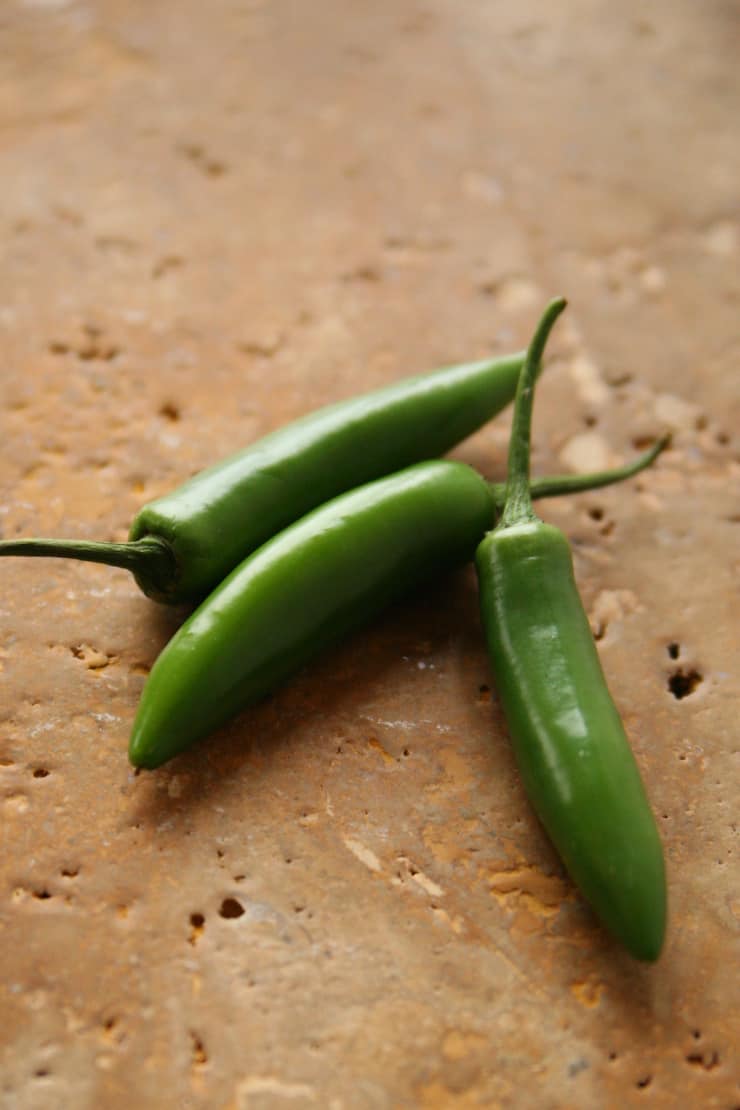
Serrano Chile
Heat: Hot (10,000–23,000 SHU)
Flavor: Bright, crisp, and fresh with a clean heat that builds gradually.
Best for:
- Fresh salsa
- Pico de gallo
- Guacamole
- Hot sauces
- Garnishes
Dried form: Serranos are occasionally dried, and called chile seco, but they’re most often enjoyed fresh.
Muy Bueno Recipes
How I use it: When I want a salsa with more kick than a jalapeño can provide, serranos are my first choice. Their fresh flavor shines in uncooked salsas and they add just the right amount of heat without overpowering the other ingredients.
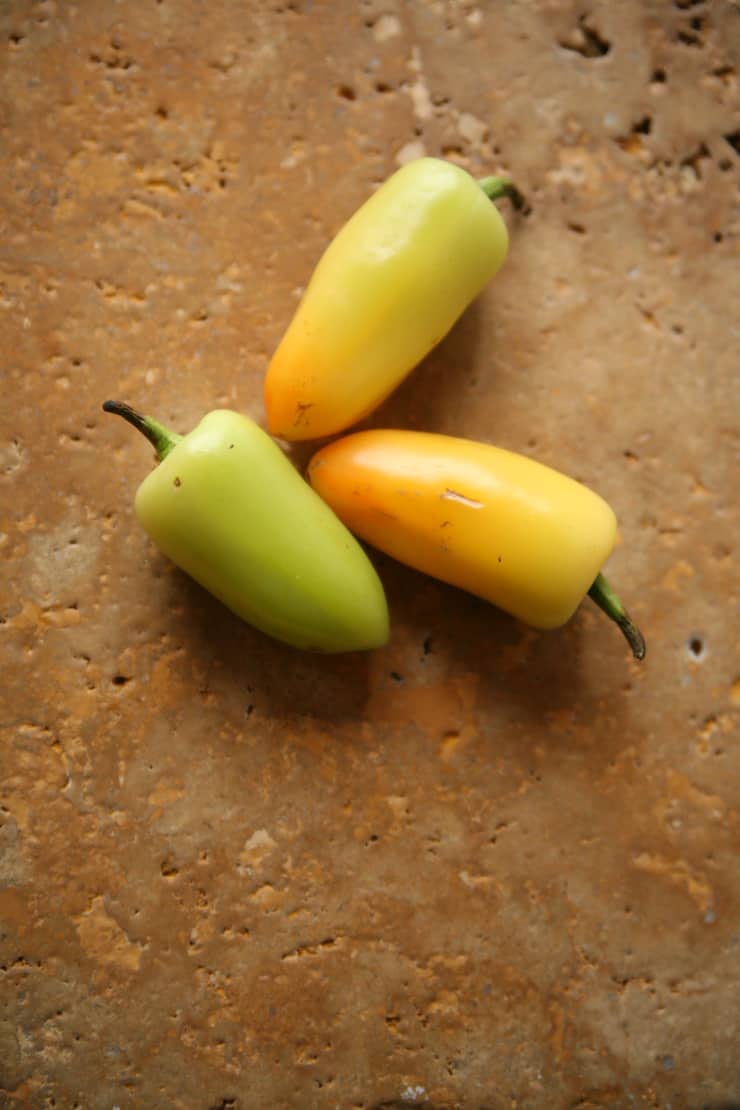
Chile Güero
Heat: Medium (5,000–8,000 SHU)
Flavor: Mildly spicy with a slightly sweet, fruity flavor that becomes richer when roasted.
Best for:
- Roasting
- Salsas
- Pickling
- Garnishes
Dried form: Chile güeros are typically enjoyed fresh and are rarely dried.
Muy Bueno Recipes
- Salsa Ranchera to top on Chiles Rellenos or Huevos Rancheros
Did you know? Güero means “blond” in Spanish, a nod to this chile’s pale yellow color. Depending on the region, chile güero may also refer to different yellow chile varieties.
Bell Pepper
Heat: None (0 SHU)
Flavor: Sweet, crisp, and mild.
Best for:
- Fajitas
- Stuffed peppers
- Salads
- Grilling
Dried form: None
Why it’s included: While bell peppers aren’t considered traditional Mexican chiles, they’re helpful as a point of reference because they contain no heat. If you’re just beginning to cook with Mexican chiles, they’re a useful baseline for understanding the Scoville Scale.
Habanero Chile
Heat: Very Hot (100,000–350,000 SHU)
Flavor: Intensely fruity with tropical, citrus-like notes followed by serious heat.
Best for:
- Yucatán-style salsas
- Pickled onions
- Marinades
- Hot sauces
Dried form: Habaneros are occasionally dried but are most commonly used fresh.
Muy Bueno Recipes
Did you know? Although they’re incredibly spicy, habaneros are prized as much for their fruity flavor as their heat. In the Yucatán Peninsula, they’re a staple ingredient in many traditional dishes.
More Chile Guides
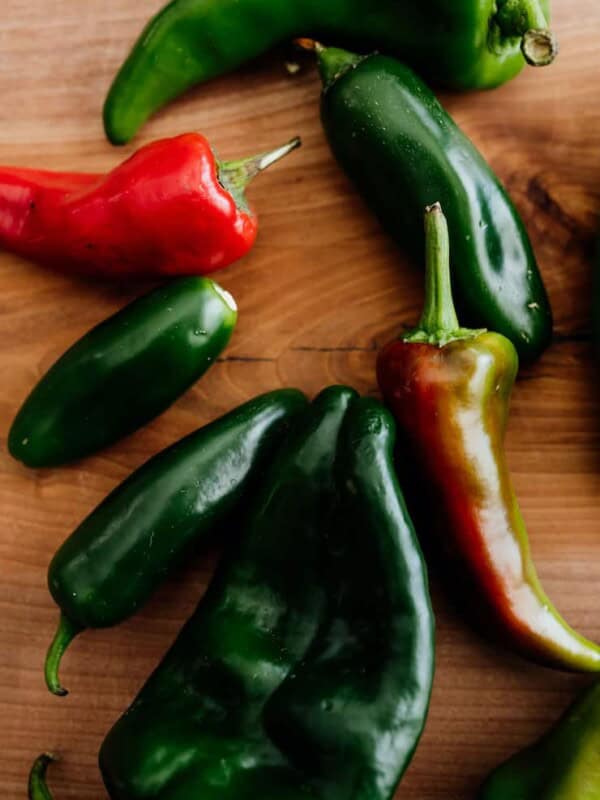
Want to dive deeper? These guides cover some of the most popular fresh chiles, plus my favorite roasting method.
Dried Mexican Chiles
Walk into almost any Mexican kitchen and you’ll likely find a bag (or several!) of dried chiles tucked away in the pantry. While fresh chiles add brightness and crisp flavor, dried chiles bring richness, color, and incredible depth to countless Mexican dishes.
One of the biggest misconceptions is that dried chiles are all about heat. In reality, many of the most commonly used dried chiles are surprisingly mild. Their real purpose is to add layers of flavor. Some are sweet and fruity, others are earthy, smoky, tangy, or even slightly chocolatey.
Before using dried chiles, they’re typically stemmed, seeded, lightly toasted to awaken their natural oils, then soaked in hot water until softened before blending into sauces. It’s a simple technique that transforms them into the flavorful foundation of enchilada sauces, pozole, tamales, birria, adobos, moles, and homemade salsas.
If you’re just starting your Mexican pantry, these are the five dried chiles I always recommend keeping on hand: guajillo, ancho, New Mexico, chile de árbol, and chipotle. With those alone, you can make many of the classic Mexican recipes I grew up eating.
My Pantry Staples
With these five chiles, you can make everything from enchilada sauce and tamales to birria, pozole, adobos, soups, and homemade salsa.
If you’re building your first Mexican pantry, start with these five dried chiles:
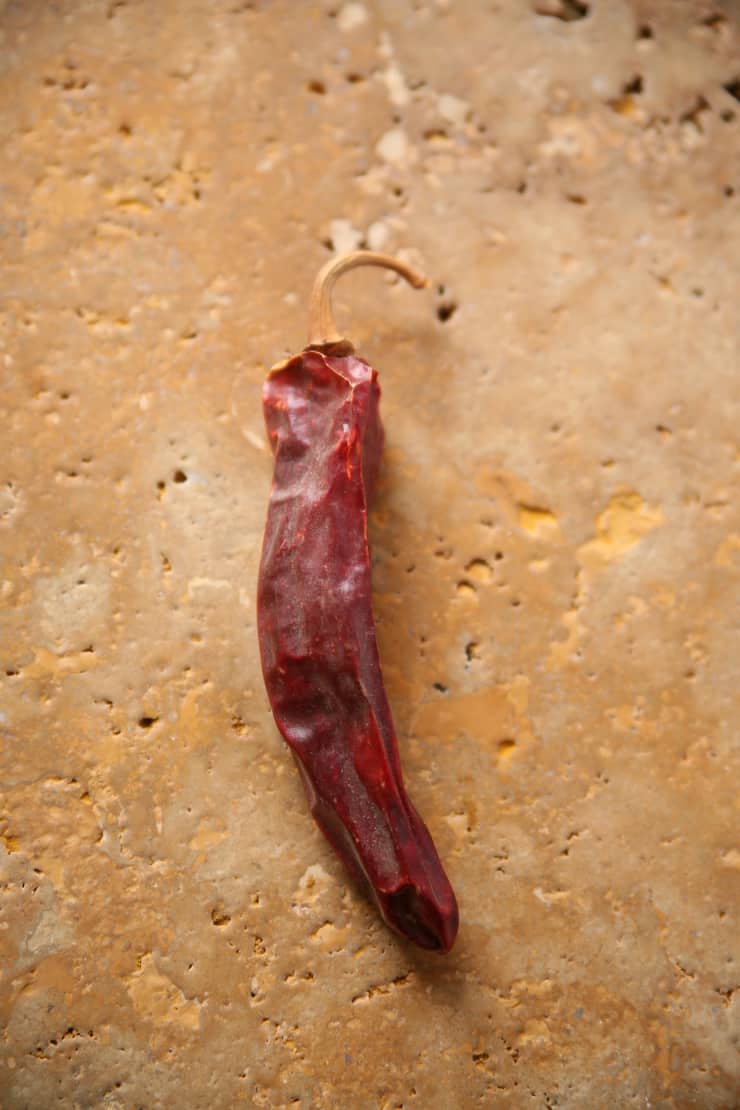
Guajillo Chile
Heat: Mild to Medium (2,500–5,000 SHU)
Flavor: Bright, tangy, slightly fruity, with subtle berry and green tea notes.
Best for:
- Enchilada sauce
- Pozole rojo
- Birria
- Tamales
- Adobos
- Marinades
Fresh form: Mirasol chile
Muy Bueno Recipes
How I use it: If I could only keep one dried chile in my pantry, it would it would be guajillo. It’s incredibly versatile and adds beautiful color and balanced flavor without overwhelming heat.
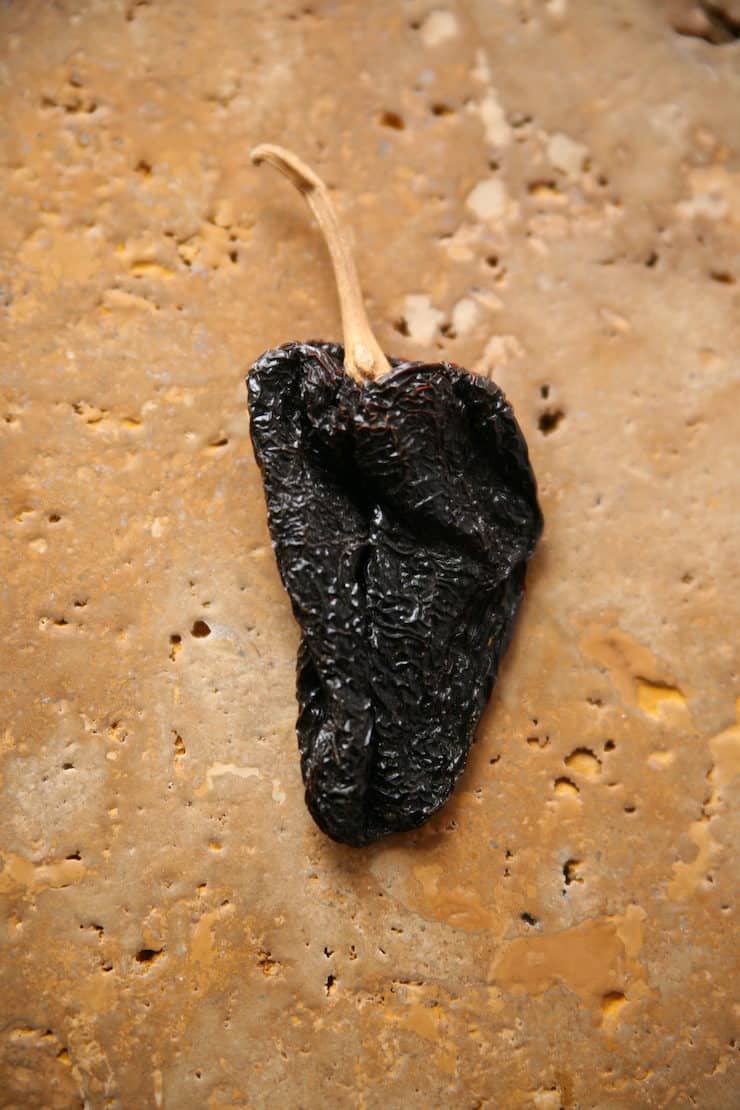
Ancho Chile
Heat: Mild (1,000–2,000 SHU)
Flavor: Sweet, rich, earthy, with notes of raisins, dried fruit, cocoa, and coffee.
Best for:
- Mole
- Enchilada sauce
- Adobo
- Chili
- Marinades
Fresh form: Poblano chile
Muy Bueno Recipes
Did you know? Ancho means “wide” in Spanish, a reference to its broad, heart-shaped appearance. It’s one of the mildest dried Mexican chiles and prized more for its rich flavor than its heat.
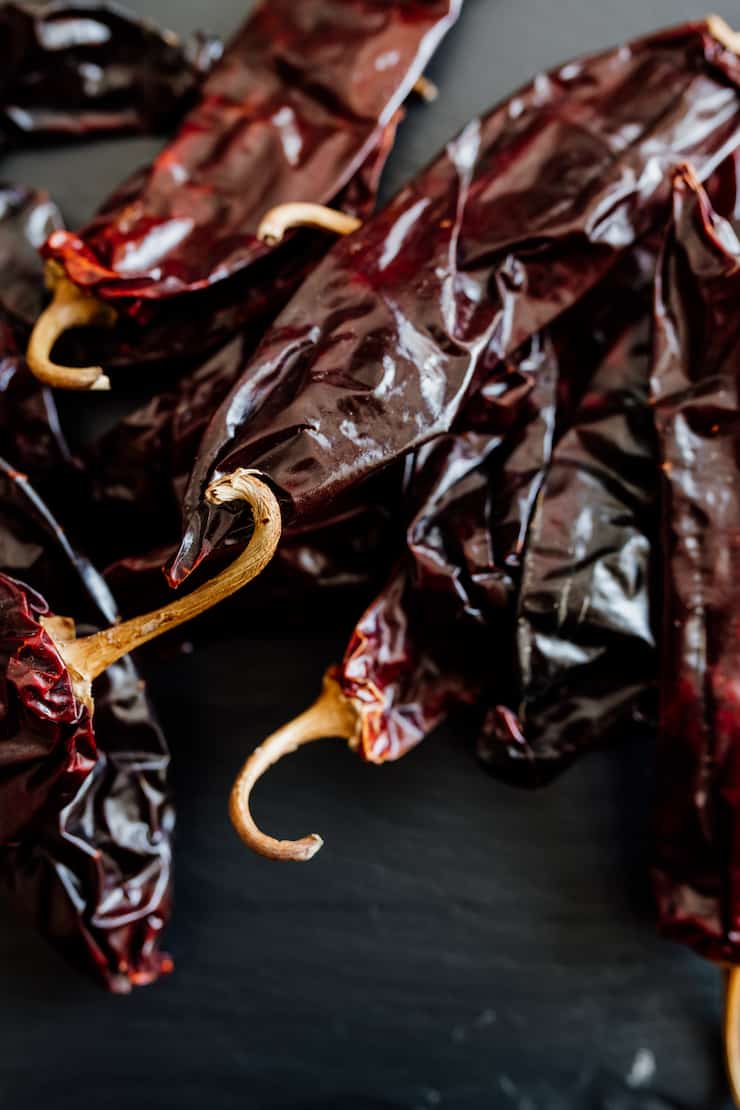
New Mexico Chile (Chile Colorado)
Heat: Mild to Medium (500–2,500 SHU)
Flavor: Earthy, slightly sweet, and mellow with subtle dried cherry notes.
Best for:
- Red chile sauce
- Enchiladas
- Tamales
- Chile Colorado
- Soups and stews
Fresh form: New Mexico chile (Anaheim is a milder cultivar in the same chile family.)
Muy Bueno Recipes
How I use it: Growing up, this was the chile that defined red chile sauce in our family. It’s still the one I reach for whenever I’m craving the flavors of home.
Did you know? In many parts of the Southwest, these dried chiles are simply called red chiles or chile colorado, referring to their deep red color rather than a specific recipe.
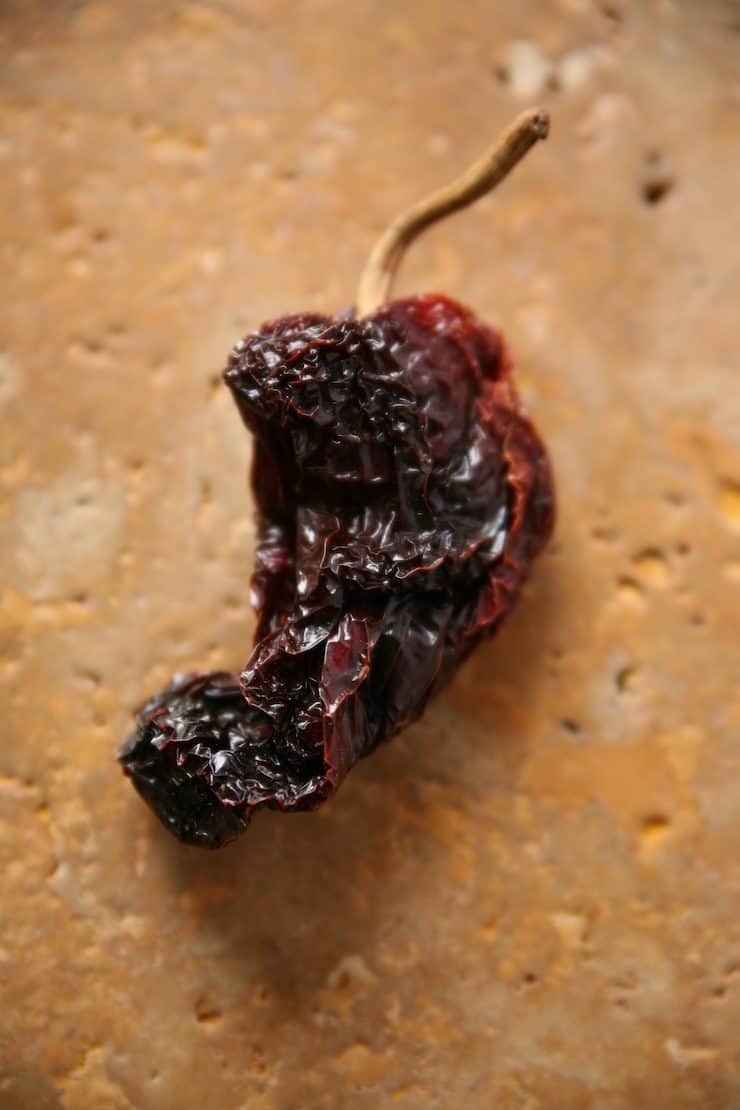
Pasilla Chile
Heat: Mild to Medium (1,000–2,500 SHU)
Flavor: Earthy, woodsy, slightly tangy, with hints of raisins and cocoa.
Best for:
- Mole
- Table sauces
- Salsa
- Braised meats
Fresh form: Chilaca chile
Muy Bueno Recipes
Did you know? The name pasilla comes from the Spanish word pasa, meaning “raisin,” because of its dark color and wrinkled appearance.
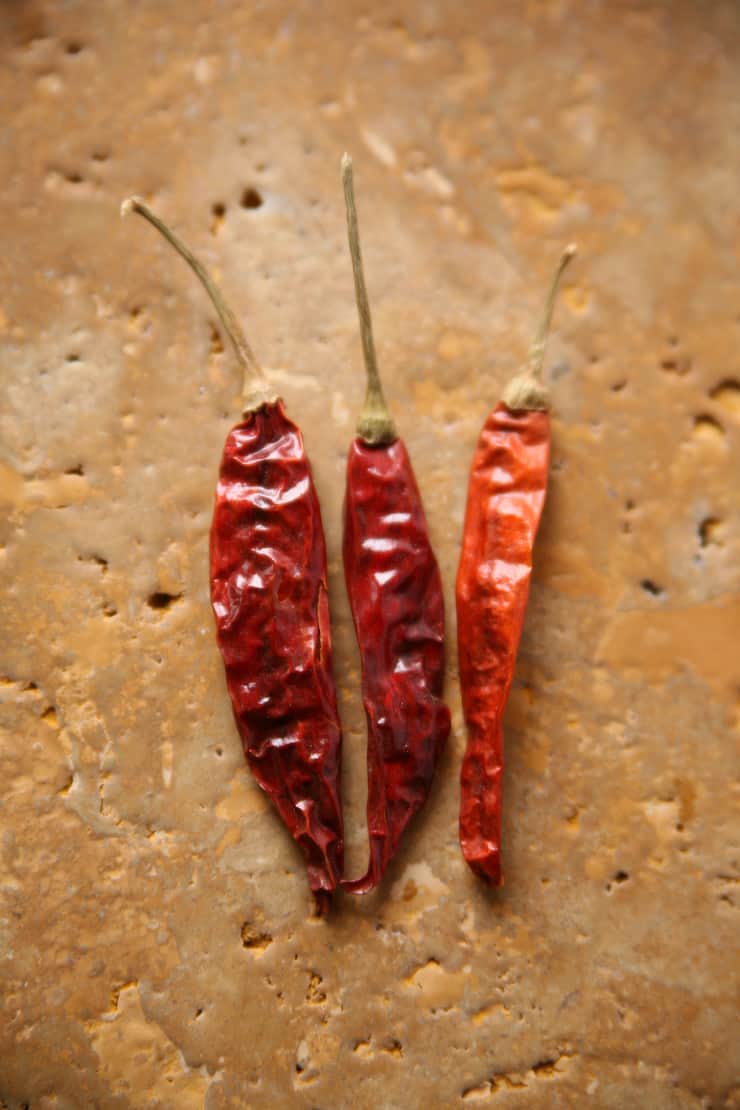
Chile de Árbol
Heat: Hot (15,000–30,000 SHU)
Flavor: Bright, grassy, nutty, and smoky with a clean, lingering heat.
Best for:
- Salsa de Chile de Árbol
- Salsa macha
- Hot sauces
- Infused oils
Fresh form: Typically sold dried.
Muy Bueno Recipes
How I use it: When a salsa needs extra heat without changing its flavor too much, I reach for chile de árbol. A little goes a long way.
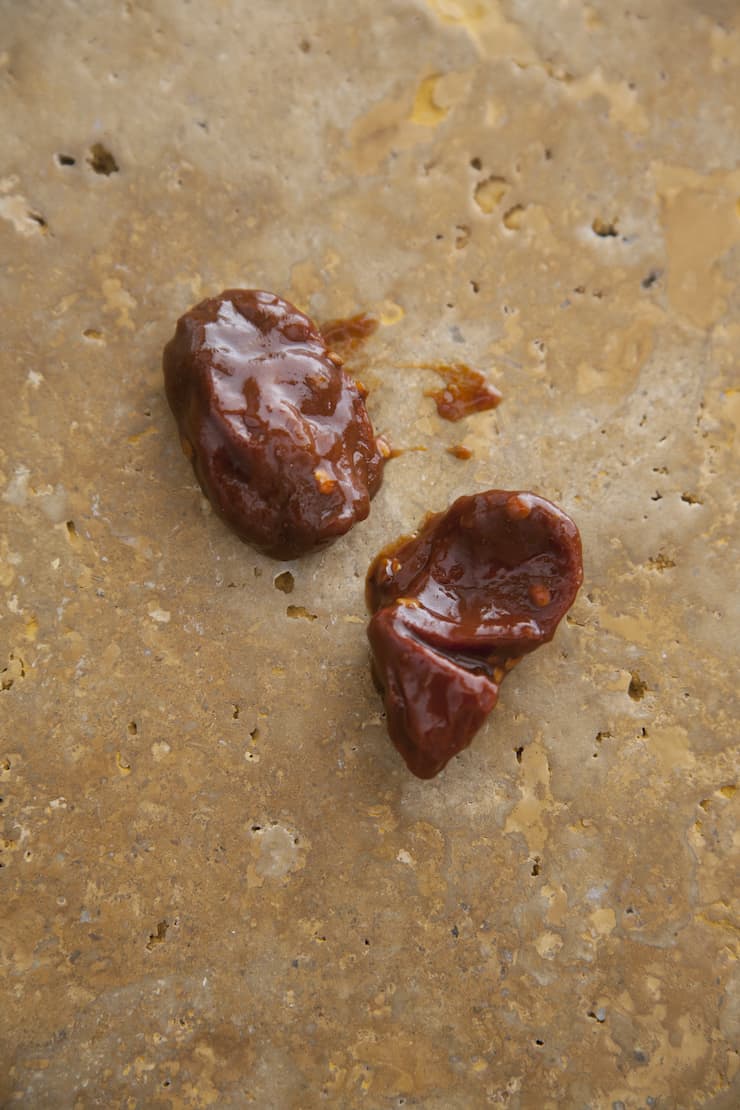
Chipotle Chile
Heat: Medium to Hot (2,500–8,000 SHU)
Flavor: Intensely smoky, earthy, and slightly sweet.
Best for:
- Tinga
- Marinades
- Beans
- Barbacoa
- Sauces
Fresh form: Red jalapeño
Muy Bueno Recipes
Did you know? Most canned chipotle peppers in adobo are morita chipotles, which are smoked for a shorter time and have a fruity, smoky flavor. A second variety, called meco, is smoked longer and has a stronger, earthier taste.
Optional Specialty Chiles
I would also include a shorter section for chiles that aren’t in everyone’s pantry but are worth knowing.
Mulato Chile
- Heat: Mild (2,500–3,000 SHU)
- Flavor: Chocolate, licorice, dried fruit.
- Fresh form: Mature poblano.
- Best for: Mole poblano.
Cascabel Chile
- Heat: Mild to Medium (1,500–2,500 SHU)
- Flavor: Nutty, earthy, slightly smoky.
- Best for: Salsas and table sauces.
Did you know? Cascabel means “little rattle.” The loose seeds inside the dried chile rattle when you shake it.
Morita Chile
- Heat: Medium to Hot (5,000–10,000 SHU)
- Flavor: Fruity and smoky.
- Best for: Salsas and adobos.
Puya Chile
- Heat: Medium to Hot (5,000–8,000 SHU)
- Flavor: Fruity, bright, and slightly sharper than guajillo.
- Best for: Salsas and marinades.
How to Buy Mexican Chiles
Fresh
- grocery stores
- Latin markets
- farmers markets
Dried
- Mexican grocery stores
- online
Look for
- flexible
- glossy
- aromatic
Avoid
- brittle
- dusty
- faded
Ready to Cook with Mexican Chiles?
Now that you know the difference between fresh and dried Mexican chiles, it’s time to put them to work in your kitchen. Whether you’re making homemade enchilada sauce, simmering a pot of pozole verde or pozole rojo, roasting poblanos for chile rellenos, or blending a fresh salsa casera, understanding which chile to use is the first step toward authentic Mexican cooking.
Browse my collection of Mexican recipes and discover just how versatile these incredible ingredients can be.










Is chile de arbol the same as Thai chilies
They’re similar in heat but not the same. ️ Chile de árbol has a smoky, earthy flavor, while Thai chiles are more sharp and fruity. You can substitute one for the other in a pinch, but the flavor will be a little different.
Was surprised by the absence of the Hatch Chile on your illustration, being from New Mexico. Can you advise where it falls on the chart?
Hatch chile peppers are a generic name for New Mexican peppers that are grown and harvested in the Hatch Valley region, New Mexico. Hatch Chile peppers are earthy in flavor, similar to the Anaheim chili pepper.
First time I have seen a good explanation of peppers. When shopping for some one day in HEB I asked two different Mexican ladies to point out the pepper required for the recipe I had found, the name escapes me now, neither could which surprised me. I had just been reading one of your recipes which required roasted green peppers, which once again confused me until farther down the page I found your introduction to peppers, a name is better than a color, thank you.
Chile Colorado is not anaheim s. Chile Colorado are ripened hatch green chile from Hatch NM. And they are hot asf. Pinch Texans no save nada de los chiles. Colo los chipotles y los guajillos lmao
Not all of the Hatch chilis are super spicy. They range in heat, but I feel like Anaheim and hatch, while they appear similar, their flavor profile is totally different. The thickness of the skin is much different, the pattern of the veins and seeds differs. I can see how they are related but not the same at all, at least not to me!
I really loved this article. Very practical and I especially liked the connection to your recipes. I have 116 recipes for salsas and hot sauce that I put in bottles! Although I’ve aways wondered, do Mexicans make a distinction between hot sauce (in bottles) and salsas or are they all just considered salsas? Let’s not forget the dangerously super hot habanero. Buttery. Hint of smoke. I make a salsa with it, then freeze it in mini-ice cube trays, and add a mini-cube to soups. Thanks for your website and work!
My favorite is the chile pequin. A friend once told me “only use one pequin per tomatoe as they are hot”.
I loved the way you have written and also the pictures are also yummy and great.. When you come to my blog I will share a discount coupon for you for this lovely post 🙂
Such an interesting post.
I looove chilli. Mild hot in meal or dried or fresh.
I cook with it on daily basis.
Yum yum
http://potsofsmiles.blogspot.co.uk/
xxxx
Hola Yvette! I really enjoy your blogs. I wonder if you can help me. When I was a young girl, I remember my mom and Nana making a thin, crepe like egg dish. I don’t recall any of the ingredients except for dried ground shrimp, the scrambled eggs and a red enchilada type sauce. Do you have any idea how to make these or the actual ingredients? Popular during Lent. Mucha gracias!!!!!
Hi Christina, sounds delicious! I wish I knew what it was, but have no idea.
It’s called camarones con noples en Chile rojo. In English dried shrimp with cactus in red sauce. Yes it’s made during Lent. You said the ingredients, bet the eggs and add shrimp drop a spoon full into hot oil and cook. Make your enchilada sauce add your cook shrimp patties into sause and cooked cactus. Delish!*
Love this! My boyfriend’s mum always uses a variety of chiles & I never know which ones! This covers some of the bases. She also uses a super tiny chile that comes in red & green. :]